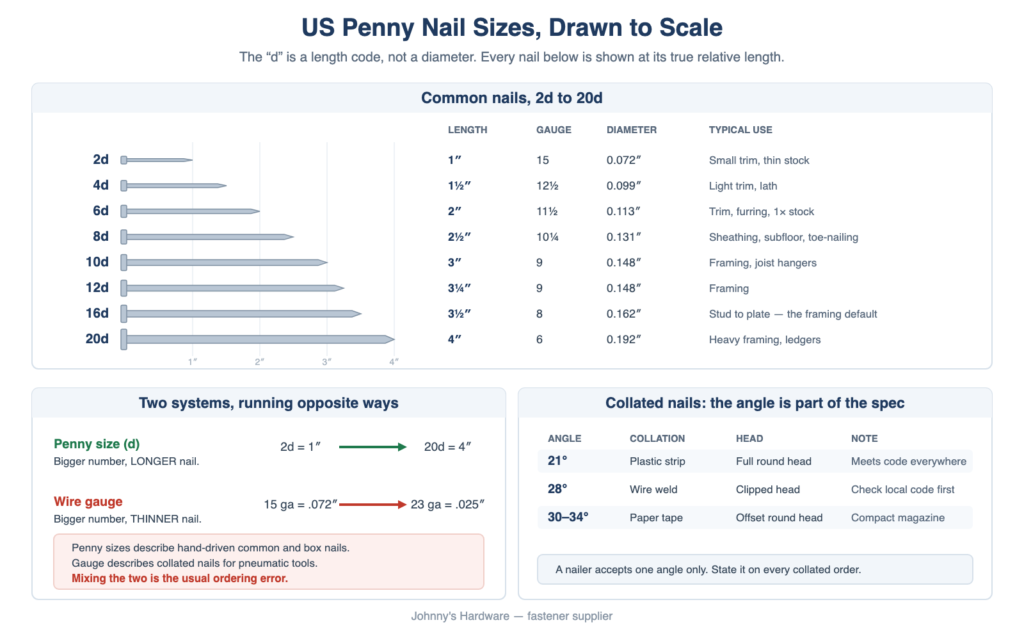
A nail’s size is written as a penny number — 8d, 16d — and that number is a code for length, not a diameter and not a weight. An 8d nail is 2½ inches long; a 16d nail is 3½ inches. The diameter comes along with it by convention rather than by definition, and changes depending on whether the nail is a common, a box or a sinker.
Collated nails for pneumatic tools use a different system entirely. Those are sized by wire gauge, and gauge runs the opposite way: the bigger the number, the thinner the nail. Getting these two systems confused is the most common error on a nail order.
Nail size chart: penny sizes at a glance
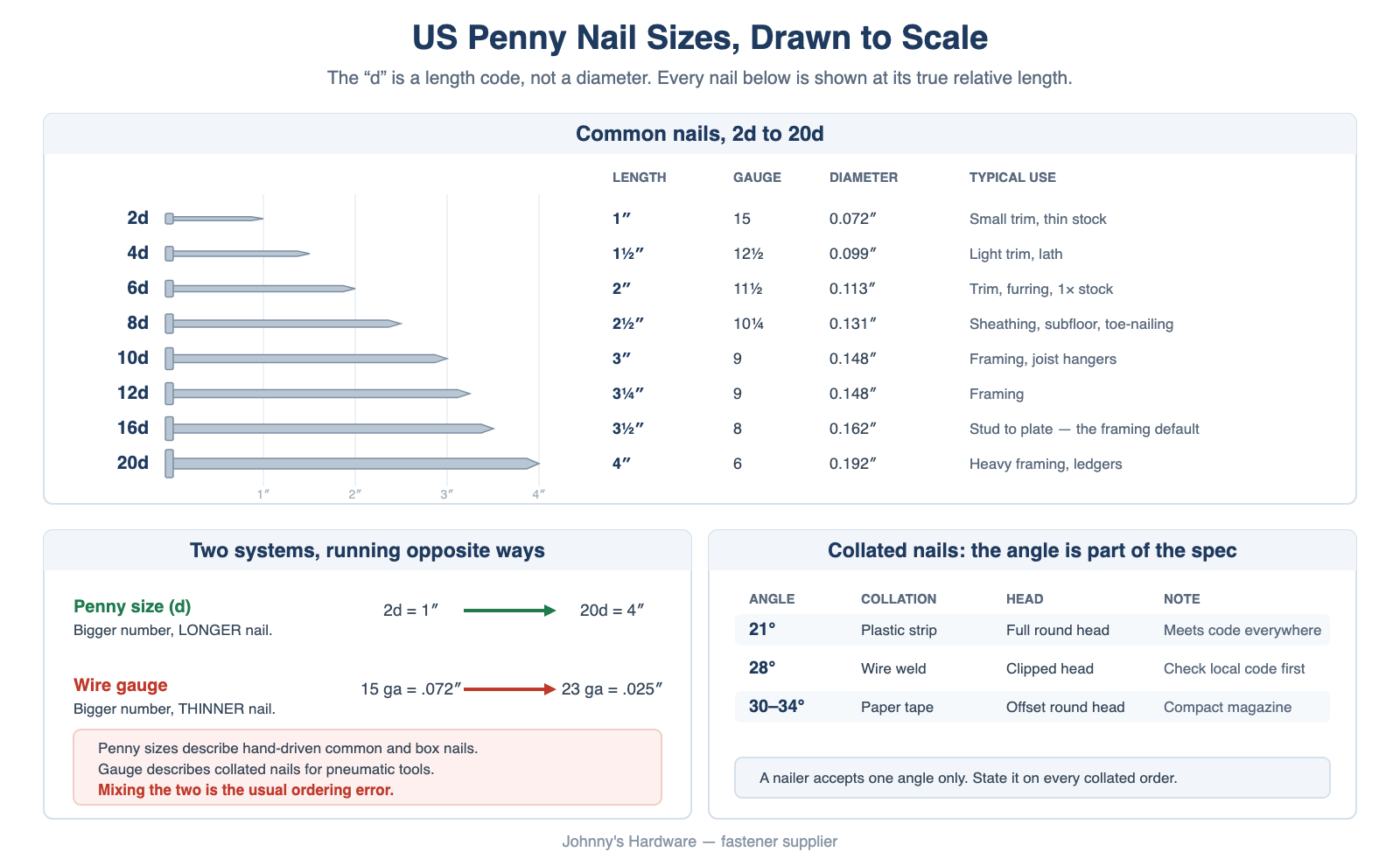
The full range, with common nail diameters:
| Penny size | Length | Length (mm) | Gauge | Diameter |
|---|---|---|---|---|
| 2d | 1″ | 25 | 15 | 0.072″ |
| 3d | 1¼″ | 32 | 14 | 0.080″ |
| 4d | 1½″ | 38 | 12½ | 0.099″ |
| 5d | 1¾″ | 44 | 12½ | 0.099″ |
| 6d | 2″ | 51 | 11½ | 0.113″ |
| 7d | 2¼″ | 57 | 11½ | 0.113″ |
| 8d | 2½″ | 64 | 10¼ | 0.131″ |
| 9d | 2¾″ | 70 | 10¼ | 0.131″ |
| 10d | 3″ | 76 | 9 | 0.148″ |
| 12d | 3¼″ | 83 | 9 | 0.148″ |
| 16d | 3½″ | 89 | 8 | 0.162″ |
| 20d | 4″ | 102 | 6 | 0.192″ |
| 30d | 4½″ | 114 | 5 | 0.207″ |
| 40d | 5″ | 127 | 4 | 0.225″ |
| 60d | 6″ | 152 | 2 | 0.263″ |
Two things to know before using this table on an order. Published diameters vary by a few thousandths between manufacturers, because the penny system fixes length by convention and leaves diameter to the maker. And there is no 11d, 13d, 14d or 15d — the series skips, which surprises people building a size matrix for the first time.
Up to 10d there is a formula: length in inches = (penny size + 2) ÷ 4. So 8d gives (8+2)/4 = 2½″. It holds from 2d to 10d and then breaks, because 12d would be 3½″ by the formula and is actually 3¼″.
Where the “d” comes from
It is the abbreviation for the Roman denarius, used for the English penny. In medieval England nails were priced per hundred, so a hundred of the smaller nails cost fourpence and became fourpenny nails. The price is long gone and the label stayed. This is worth knowing only because it explains why the system looks arbitrary — it is a fossilised price list, not an engineering scale.
Common, box and sinker: same penny size, different nail
The penny number fixes length. It does not fix the shank, and the three main hand-driven types differ at the same nominal size:
| Type at 8d | Diameter | Why |
|---|---|---|
| Common nail | 0.131″ | Thick shank, flat head. Maximum holding power where splitting is not a concern |
| Box nail | 0.113″ | Thinner at the same length, so it splits thin or dry timber far less. Correspondingly lower withdrawal strength |
| Sinker | 0.113″ | Slightly shorter than nominal with a countersinking head and often a coated shank. Common in North American framing |
The practical consequence: substituting box nails for common nails on a structural connection is not a like-for-like swap. Building codes that call for a specific nail in a shear wall or joist hanger schedule mean that nail. A common nail and a box nail of the same penny size are two different products with two different capacities.
The gauge system, and why it runs backwards
Collated nails for pneumatic nailers are not sold in penny sizes. They are specified by wire gauge and length separately — “18 gauge × 1¼″” — and the gauge number describes thickness on a scale where higher means thinner. That is the exact opposite of the penny convention, which is why the two get mixed up.
| Gauge | Diameter | Called | Work |
|---|---|---|---|
| 23 gauge | 0.025″ | Pin nails | Headless. Delicate trim and glue-ups where the hole must be invisible. Almost no holding power on its own |
| 18 gauge | 0.0475″ | Brad nails | Small head. Trim, beading, cabinet backs. The general-purpose finish size |
| 16 gauge | 0.0625″ | Finish nails | Heavier trim, casing, baseboard. Straight collation |
| 15 gauge | 0.072″ | Finish nails | Heaviest trim, door jambs, stair parts. Usually angled collation |
Note that 15 gauge (0.072″) and a 2d common nail (0.072″) are the same thickness described in two different languages. Neither system is wrong; they belong to different trades. Which of these gauges belongs on which trim is covered in brad nail vs finish nail.
Collated nails: the angle is part of the specification
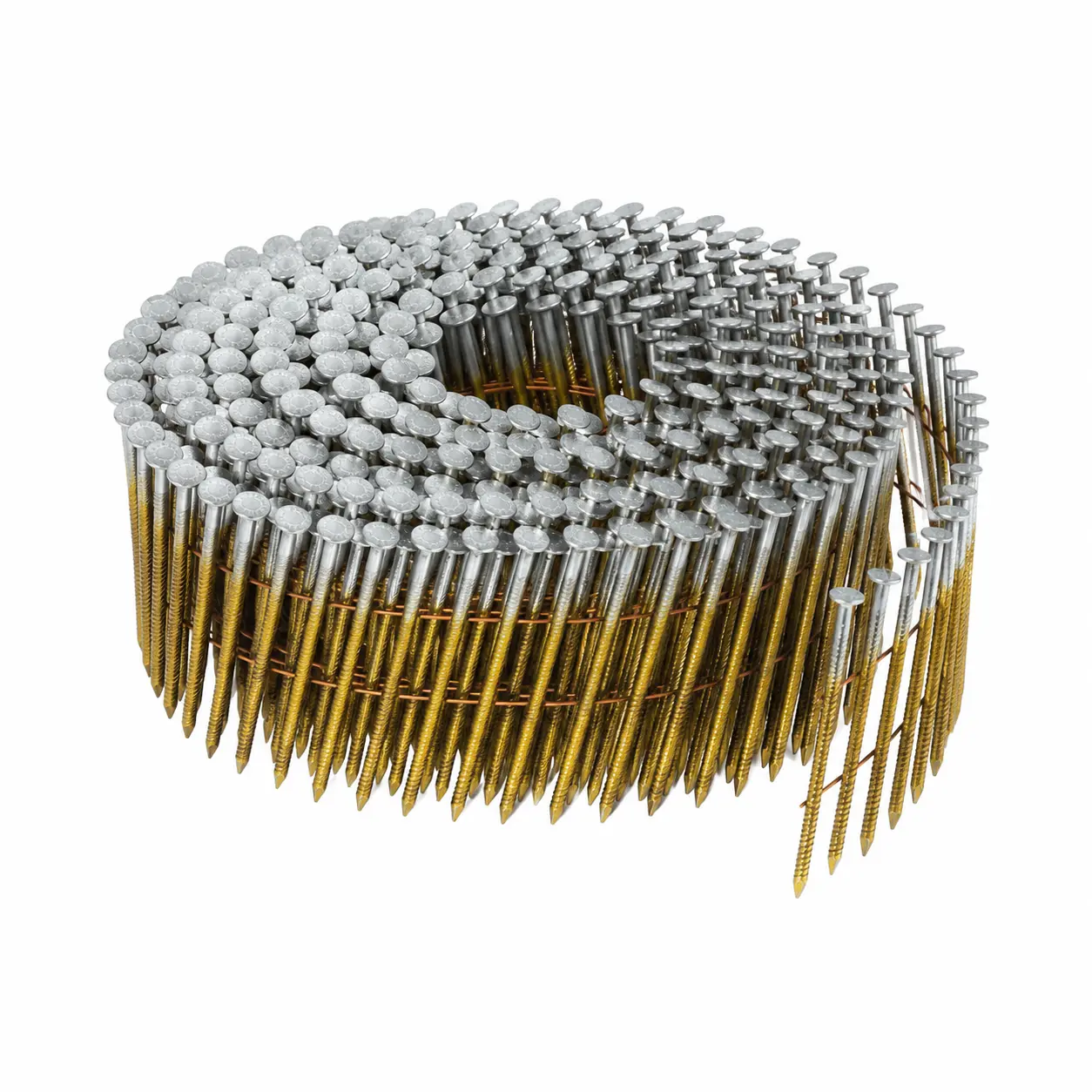
Framing nails come in strips or coils, and the strip is held at an angle to suit the nailer’s magazine. A nailer accepts one angle only, so the angle is not a preference, it is a compatibility requirement.
| Angle | Collation | Head | Note |
|---|---|---|---|
| 21° | Plastic strip | Full round head | Accepted by building codes everywhere. Plastic fragments eject on firing |
| 28° | Wire weld | Clipped head | Clipped heads are restricted in some jurisdictions. Check before committing a programme |
| 30–34° | Paper tape | Offset round head | Compact magazine, no plastic debris. Paper is damaged by damp storage |
The clipped head point matters commercially. A clipped head has less bearing area than a full round head, and some codes and inspectors will not accept it in structural framing. For a distributor serving mixed markets, 21° full round head is the safe default because nothing rejects it.
What size for what job
| Job | Usual size | Notes |
|---|---|---|
| Stud to plate, face nailing | 16d (3½″) | The framing default. Framing nails in ring or screw shank where withdrawal matters |
| Toe nailing studs | 8d (2½″) | Shorter because the nail enters at an angle |
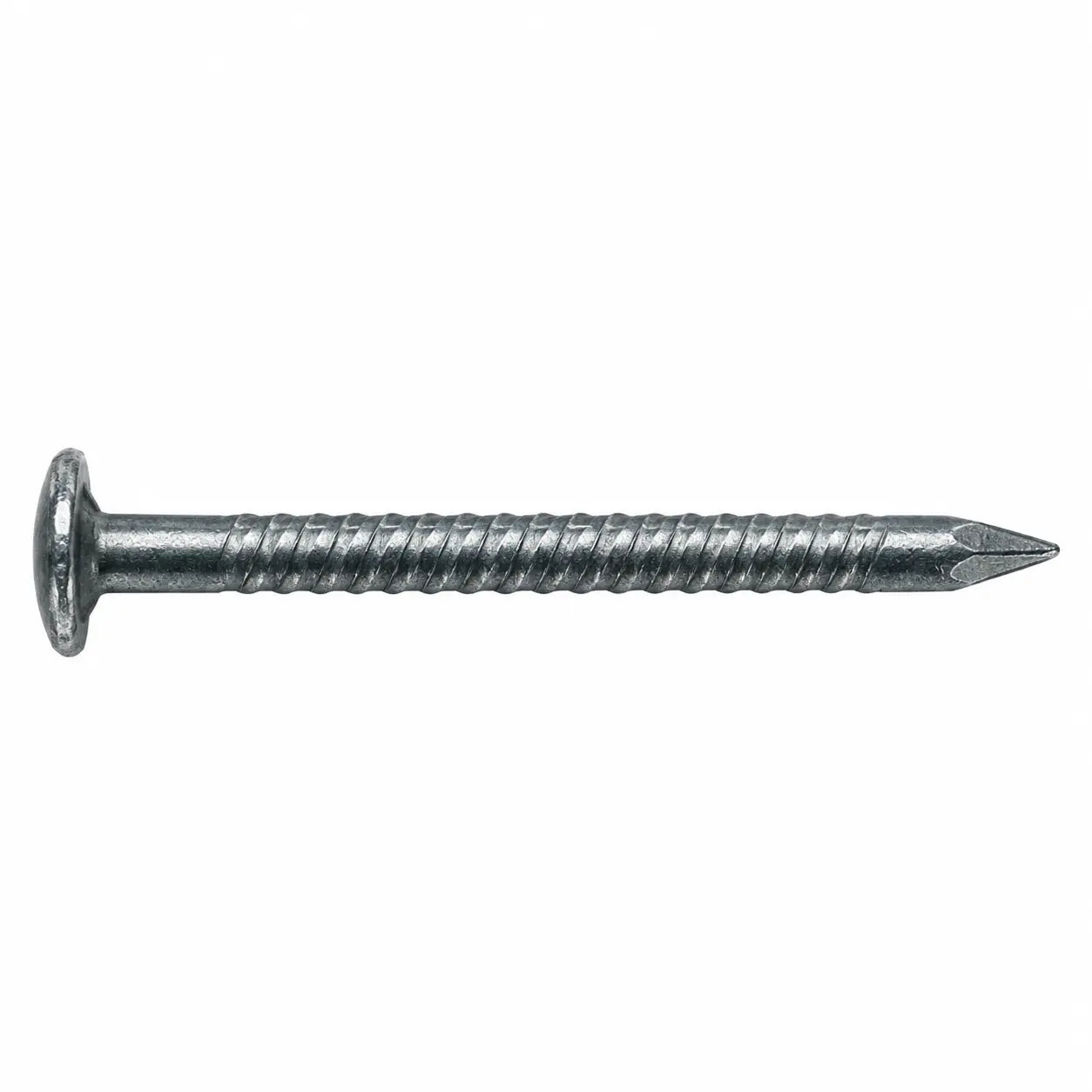
| Sheathing and subfloor | 8d ring shank | Ring shank resists withdrawal and squeaks. Often specified by code |
| Joist hangers | 10d × 1½″ hanger nails | Full diameter, short length. Never substitute a roofing nail or a screw |
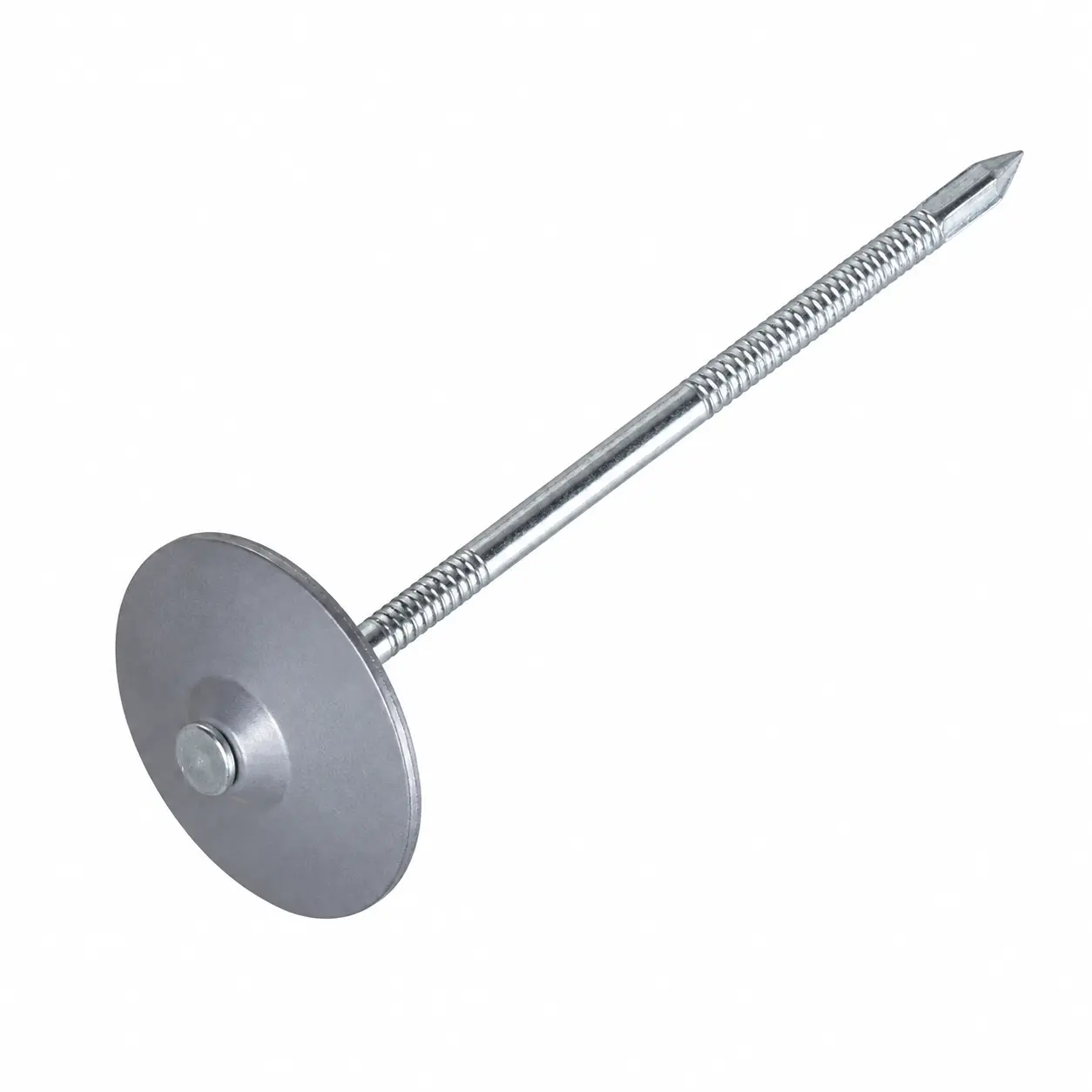
| Asphalt shingles | 1¼″ galvanised, large head | Roofing nails — the wide head is the working part. Length rises with layers, and quantities are set by the nailing pattern |
| Siding | 6d–8d galvanised | Siding nails, ring shank, hot-dip for exterior exposure |
| Baseboard and casing | 15 or 16 gauge, 2″–2½″ | Long enough to reach framing behind the drywall |
| Beading, small trim | 18 gauge brad, 1″–1¼″ | Small head fills easily |
| Concrete and block | Hardened, 1″–3″ | Masonry nails in hardened steel. Eye protection is not optional — they shatter |
The general rule behind the table: a nail should penetrate the far member by about two thirds of its length, or roughly three times the thickness of the piece being fastened. That is a starting point, not a substitute for a code schedule where one applies.
Final thoughts
Penny sizes look archaic because they are — a medieval price list that outlived its prices. But the system is consistent, and once you read the “d” as a length code the chart stops being something to memorise. The real care is needed at the two boundaries: between common and box nails at the same penny size, and between the penny and gauge systems, which count in opposite directions and belong to different halves of the trade.
FAQ
What does the “d” in nail sizes mean?
It stands for the Roman denarius, the abbreviation used for the English penny. Nails were once priced per hundred, so a hundred nails costing eightpence became eightpenny nails, written 8d. The price is irrelevant now and the number survives purely as a length code — 8d means 2½ inches, nothing more.
How long is a 16d nail?
3½ inches, or 89 mm. A 16d common nail is 0.162 inches in diameter, roughly 8 gauge. It is the standard size for face nailing studs to plates in North American framing. A 16d sinker is slightly shorter at about 3¼ inches and thinner, so the two are not interchangeable where a code schedule specifies one.
What is the difference between 8d and 10d nails?
Half an inch of length and a step in thickness. An 8d nail is 2½″ at 0.131″ diameter; a 10d is 3″ at 0.148″. In practice 8d is the sheathing and toe-nailing size and 10d is used for joist hangers and heavier connections. Both are common sizes to stock, and neither substitutes for 16d in face nailing.
Why do gauge numbers go down as nails get bigger?
Wire gauge measures how many times the wire was drawn through a die to reduce it. More passes means a thinner wire and a higher number, so 23 gauge is finer than 18 gauge, which is finer than 15 gauge. It is a manufacturing count rather than a dimension, which is why it runs the opposite way to penny sizes and to every measurement written in inches or millimetres.
What is the difference between a common nail and a box nail?
Shank diameter at the same length. An 8d common nail is 0.131″ and an 8d box nail is 0.113″. The thinner box nail splits thin or dry timber much less, at the cost of lower holding power. Where a structural schedule or code table names a common nail, a box nail is not an acceptable substitute even though the length matches.
What size nails should I use for framing?
16d, 3½ inches, for face nailing studs to plates, and 8d for toe nailing because the nail enters at an angle. Sheathing and subfloor usually call for 8d ring shank. Where a local code or an engineered drawing gives a nailing schedule, that schedule takes priority — it will name both the size and the nail type.
Are brad nails and finish nails the same?
No. Brad nails are 18 gauge at 0.0475″ with a small head, suited to light trim and cabinet work. Finish nails are 15 or 16 gauge, noticeably thicker, with more holding power for heavier casing, baseboard and door jambs. The nailers are different tools and the nails are not interchangeable between them.
Does the collation angle matter?
Yes, absolutely. A pneumatic nailer accepts one collation angle only — 21°, 28° or 30 to 34° — so nails at the wrong angle simply will not load. Head style follows from the angle too: 21° strips carry full round heads, 28° wire-weld strips usually carry clipped heads, and some jurisdictions restrict clipped heads in structural framing.
Is there an 11d or 14d nail?
No. The penny series runs 2d, 3d, 4d, 5d, 6d, 7d, 8d, 9d, 10d, 12d, 16d, 20d, 30d, 40d, 50d, 60d. It skips 11d, 13d, 14d, 15d and everything between 20d and 30d. The gaps are a survival of the original price list rather than a design decision, so a size matrix built by counting upwards will contain sizes nobody makes.
What length nail do I need for a given thickness?
A useful starting point is that the nail should be about three times the thickness of the piece being fastened, so roughly two thirds of its length ends up in the receiving member. Fastening ¾″ stock therefore suggests a nail of about 2¼″, which is a 7d. Where a code nailing schedule exists it overrides this rule of thumb.
Sourcing nails
Johnny’s Hardware supplies common, box, framing, finish, brad, pin, roofing, siding, masonry, drywall, duplex, clout, lost-head, oval wire and flooring cleat nails, plus panel pins, in penny sizes and wire gauges, loose or collated at 21°, 28° and 30–34°.
Shank options run smooth, ring and screw; finishes run bright, electro-galvanised, hot-dip galvanised and stainless. Collated orders are quoted with the angle and head style stated on the specification, so nothing arrives that a customer’s nailer will not take. Nails consolidate with the wider fastener supplier range in one shipment, with private label and retail packaging through our OEM hardware supplier service.
If the decision is still open between nailing and screwing a job, nails vs screws covers where each one belongs, and the screw size chart covers gauge numbering on the screw side.
Send the type, penny size or gauge, length, shank, finish, collation angle and quantity, and we will come back with specifications, carton data and lead times within 12 working hours.
– Johnny’s Hardware Team, QC Engineer