A lag bolt looks like a bolt and works like a screw. It has a hex head and is driven into timber with a wrench, but there is no nut: the thread cuts its own way into the wood. That mismatch between the name and the part is the source of most ordering confusion.
A lag bolt is a lag screw. “Lag bolt” is the everyday name for a heavy, hex-head wood screw that the standard, ASME B18.2.1, calls a lag screw. Both names mean the same fastener, so a quote for either is a quote for the same part.
What is a lag bolt?
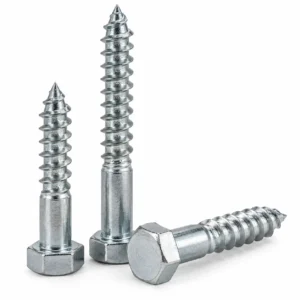
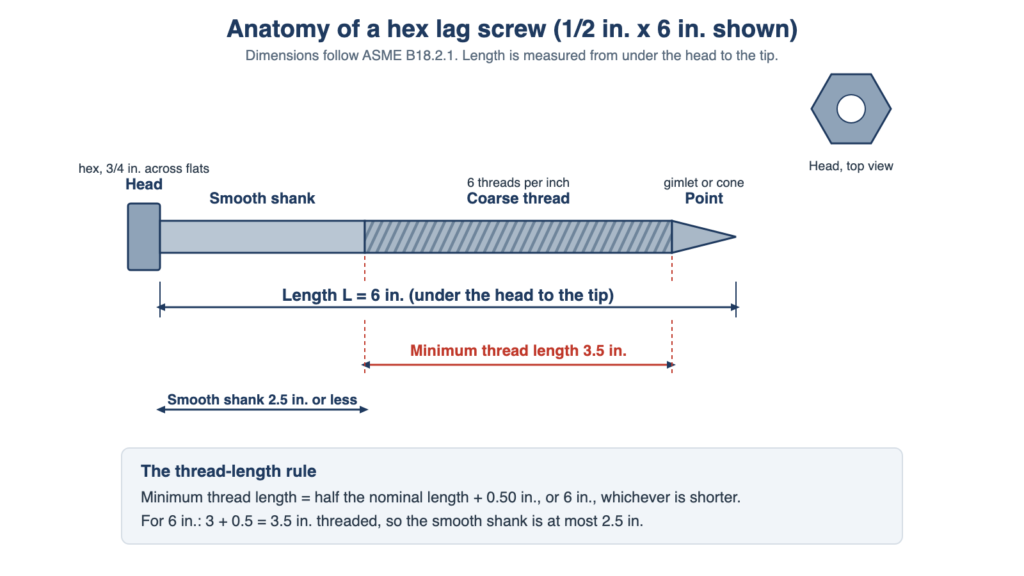
A lag bolt is a large wood screw with a hex or square head, a smooth shank under the head, a coarse thread and a pointed tip. It is turned in with a socket or spanner and holds heavy timber connections that a conventional wood screw is too small for.
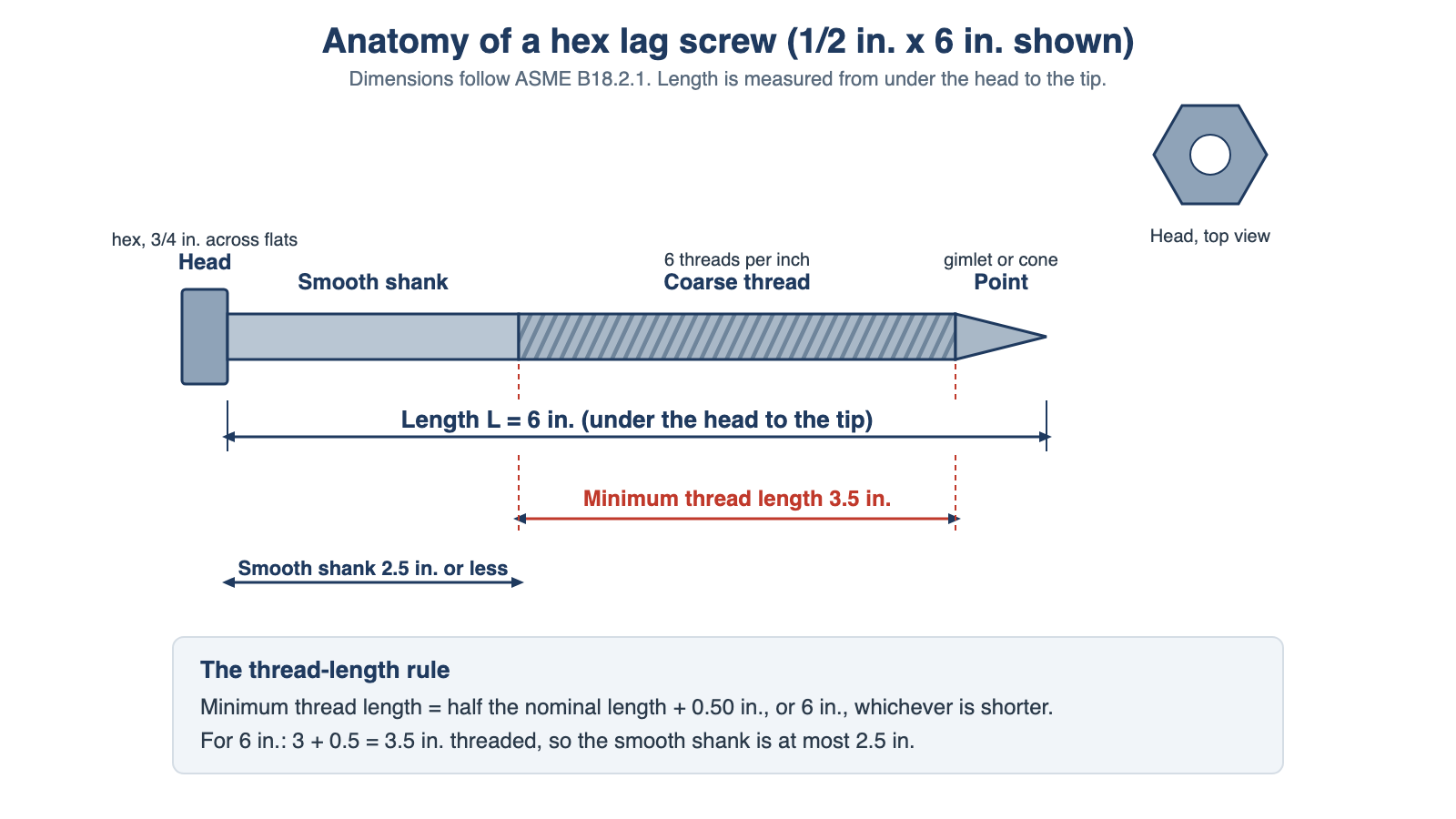
Four features separate it from other fasteners:
- A bolt-style head. The hex head takes a socket or spanner, which gives far more driving torque than a screwdriver slot or Phillips recess. Square heads also exist and are covered by Table 14 of the standard.
- A partly threaded body. The thread runs from the point back along the shank, with a smooth, full-diameter shank left under the head. That smooth part passes through the attached piece and lets the joint pull tight.
- A coarse, wide thread. Coarse threads bite deeply into timber. A 1/2 in. lag screw has 6 threads per inch, where a 1/2 in. coarse-thread bolt has 13.
- A point, not a nut. Lag screws are not pointed like a machine screw. They have a gimlet or cone point that starts into a drilled lead hole. The standard exempts lag screws from the chamfered point that other screws must have.
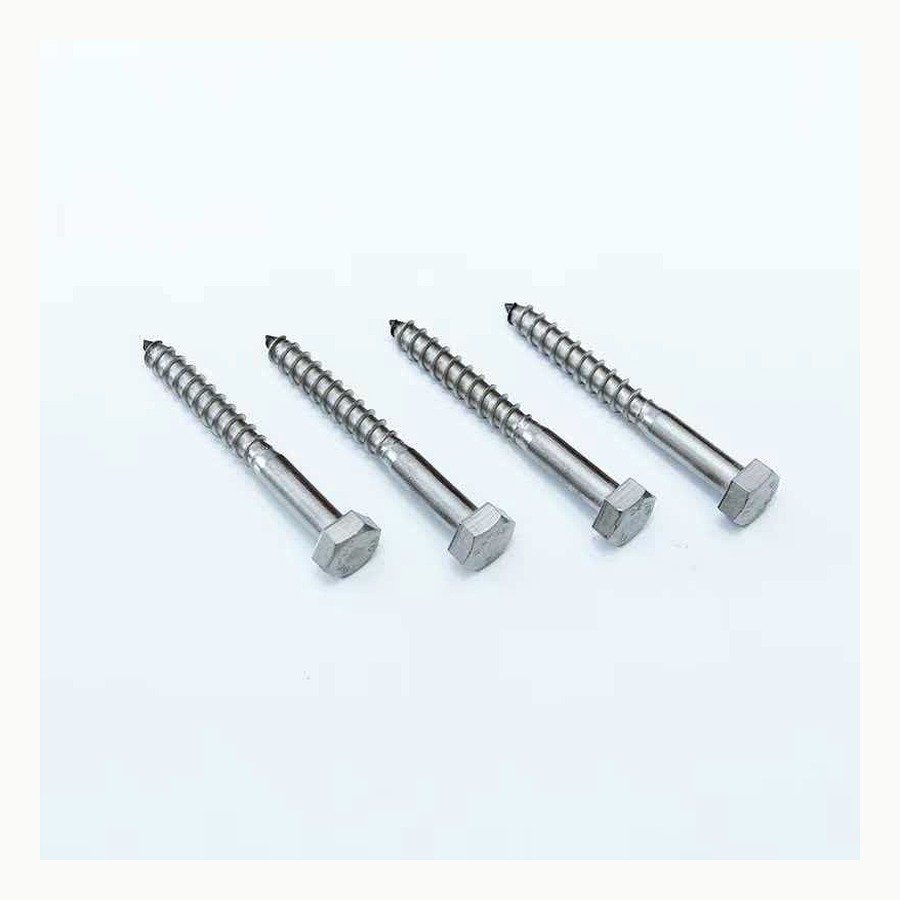
Lag bolt vs lag screw: one part, several names
Lag bolt, lag screw and coach screw all describe the same fastener. The standard name is lag screw, and the “bolt” in lag bolt is only a habit of speech.
| Name | What it means | Where you meet it |
|---|---|---|
| Lag screw | The formal name in ASME B18.2.1 for the hex or square head wood screw | Standards, drawings, engineering specifications |
| Lag bolt | The same part, named for its bolt-like head | Hardware shops, quotations, order lists |
| Coach screw | The same part, in British and Commonwealth usage | UK, Australian and many export enquiries |
| Carriage bolt | A different part: domed head, square neck and a nut. In British usage a carriage bolt is called a coach bolt | Timber to timber with a smooth outer face |
A supplier who answers a request for “lag bolts” with a quote for lag screws has not substituted anything. The risk is the other way round: a buyer who writes “lag bolt” may be assumed to want a bolt with a nut. When the two names are mixed in one enquiry, add the head shape and say that no nut is needed. The wider difference between bolts and screws is set out in bolt vs screw.
Lag screw sizes and dimensions
Hex lag screws run from No. 10 up to 1-1/4 in. in diameter, with a head width across flats that matches a standard socket. The table below gives the dimensions that decide the socket, the thread and the hole.
| Nominal size | Head across flats (socket size) | Head height | Threads per inch | Thread root diameter |
|---|---|---|---|---|
| No. 10 | 9/32 in. | 1/8 in. | 11 | 0.107 to 0.122 in. |
| 1/4 in. | 7/16 in. | 11/64 in. | 10 | 0.160 to 0.177 in. |
| 5/16 in. | 1/2 in. | 7/32 in. | 9 | 0.210 to 0.228 in. |
| 3/8 in. | 9/16 in. | 1/4 in. | 7 | 0.250 to 0.268 in. |
| 7/16 in. | 5/8 in. | 19/64 in. | Not tabulated | Not tabulated |
| 1/2 in. | 3/4 in. | 11/32 in. | 6 | 0.354 to 0.374 in. |
| 5/8 in. | 15/16 in. | 27/64 in. | 5 | 0.453 to 0.473 in. |
| 3/4 in. | 1-1/8 in. | 1/2 in. | 4-1/2 | 0.562 to 0.582 in. |
| 7/8 in. | 1-5/16 in. | 37/64 in. | 4 | 0.665 to 0.686 in. |
| 1 in. | 1-1/2 in. | 43/64 in. | 3-1/2 | 0.760 to 0.784 in. |
Values are from ASME B18.2.1-2010, Tables 15 and 16, for hex lag screws. Square lag screws have narrower heads: a 1/4 in. square-head lag screw is 3/8 in. across flats against 7/16 in. for the hex. The standard’s own note on holes is useful and short: start with the fractional drill size closest to the root diameter, and use a larger hole in hard woods.
How long is the thread?
The minimum thread length on a lag screw is half the nominal length plus 1/2 in., or 6 in., whichever is shorter. Lag screws of 11 in. or longer therefore all have the same minimum 6 in. of thread.
| Nominal length | Half length + 0.50 in. | Minimum thread length | Smooth shank, at most |
|---|---|---|---|
| 2 in. | 1.50 in. | 1.50 in. | 0.50 in. |
| 3 in. | 2.00 in. | 2.00 in. | 1.00 in. |
| 4 in. | 2.50 in. | 2.50 in. | 1.50 in. |
| 6 in. | 3.50 in. | 3.50 in. | 2.50 in. |
| 8 in. | 4.50 in. | 4.50 in. | 3.50 in. |
| 10 in. | 5.50 in. | 5.50 in. | 4.50 in. |
| 12 in. | 6.50 in. | 6.00 in. (capped) | 6.00 in. |
The table is calculated from the rule in paragraph 5.7. Screws too short for the formula are threaded as close to the head as practicable. Length is always measured from under the head to the tip, which is the opposite of a flat-head screw measured overall.
How a lag bolt holds timber
A lag bolt holds because its thread is cut into the receiving timber while its smooth shank slides freely through the attached part. The head then pulls the two together, through a washer, until the joint is tight.
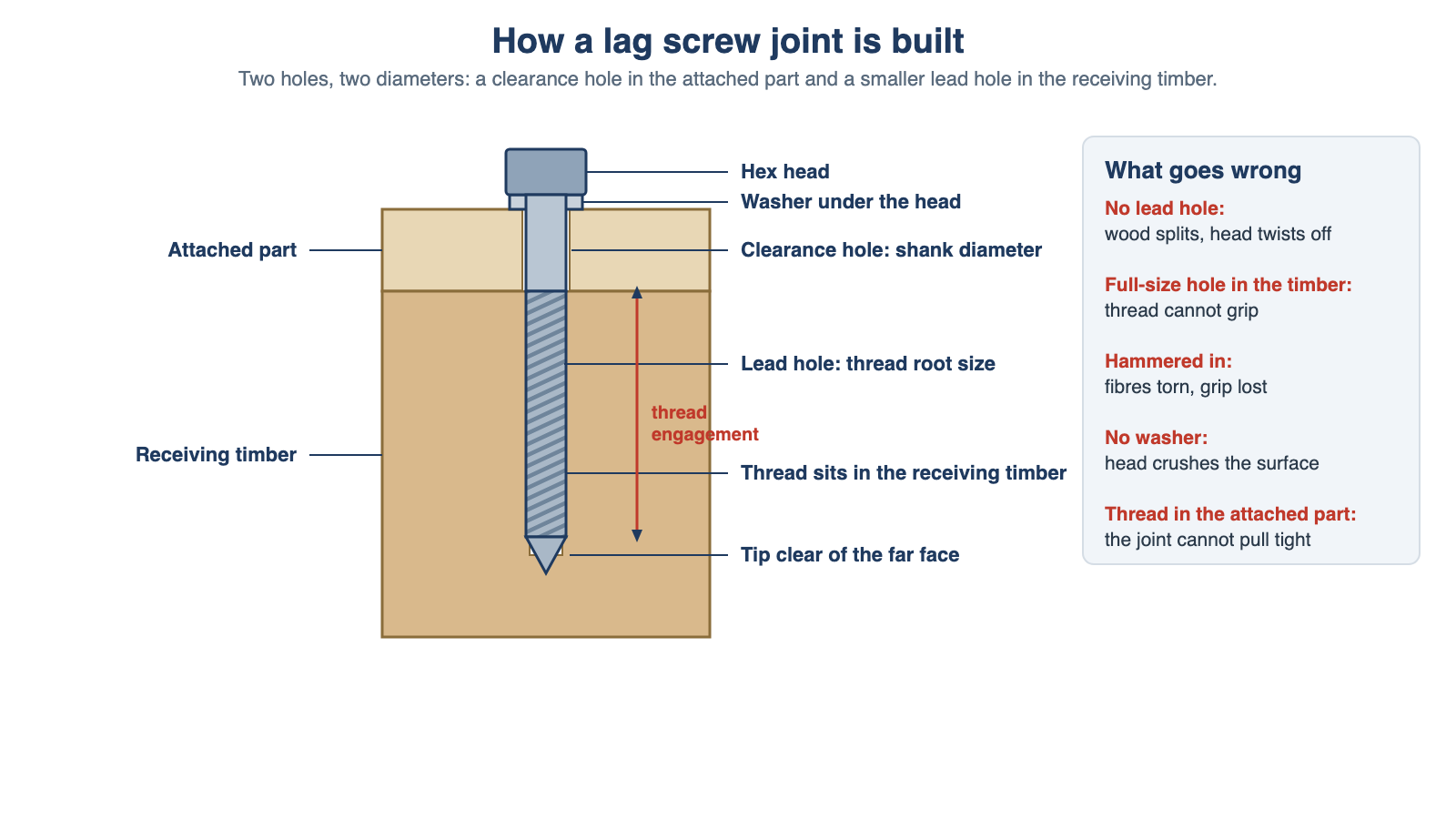
- Drill a clearance hole through the attached part, the same size as the shank. This lets the shank slide so the joint can close.
- Drill a lead hole in the receiving timber, sized to the thread root and to the density of the wood. Hard woods need a larger hole than soft. The exact sizes by species are in the pilot hole size chart.
- Fit a washer under the head so it does not crush the surface.
- Turn it in with a wrench. Hammering a lag screw tears the wood fibres and damages the thread. Soap or a similar lubricant on the thread keeps the torque manageable in dense timber.
Where the thread ends up inside the attached part, not the receiving timber, the joint cannot pull tight, which is a common cause of a loose lag bolt connection.
What lag bolts are used for
Lag bolts are used where a wood connection is too heavy for ordinary screws and one side of it cannot take a through-bolt. The usual jobs are timber framing, brackets and ledgers fixed to wood, and heavy fittings screwed to a timber base.
| Use | Why a lag screw suits it | What to check |
|---|---|---|
| Beam to post and timber-frame joints | Pulls the parts tight from one side | Timber species, edge and end distances, design load |
| Steel brackets and plates to timber | Hex head takes a socket against a plate or washer | Washer or bearing plate under the head |
| Deck ledger boards to a house band joist | A prescriptive fastener in the US residential code, with a stated size, spacing and finish | Current code edition and local amendments |
| Fence posts, gates and swing-set frames | Strong in heavy outdoor timber | Hot-dip galvanized or stainless finish |
| Machinery and equipment on a timber base | Holds a heavy fitting against vibration | Lock washer or a suitable locking arrangement |
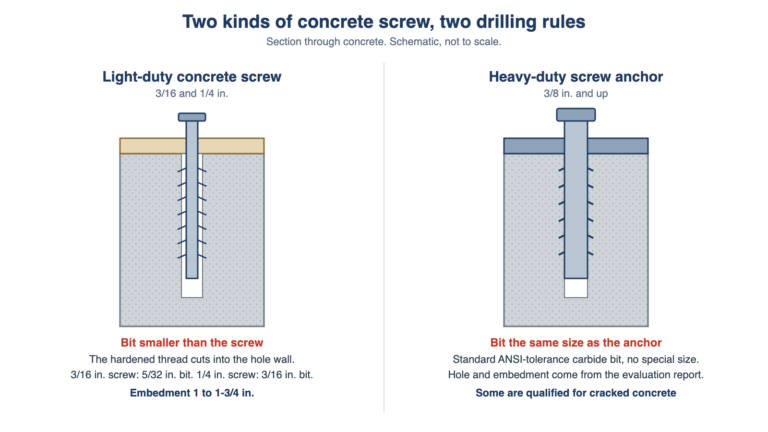
| Masonry, with a lag shield | The lag screw threads into an expansion shield set in the wall | Treat the shield as a separate anchor with its own rating |
For the ledger case, the US residential code names hot-dip galvanized or stainless lag screws or through-bolts for the deck connection, staggered along the board. Spacing comes from the code’s own table, and a structural screw with an evaluation report is accepted as an alternative on its own report’s pattern, not the lag screw table. Check the edition adopted locally, because this is a safety connection. Lag screws do not go into concrete directly; the product page for our lag screws says that bracket bases fixed into concrete need a separately specified anchoring system. The concrete anchor options are compared in types of concrete anchors.
Materials and finishes
A lag screw has no property class like a bolt. The standard requires only the chemistry of the steel, and the strength of the connection comes from the wood and the joint design.
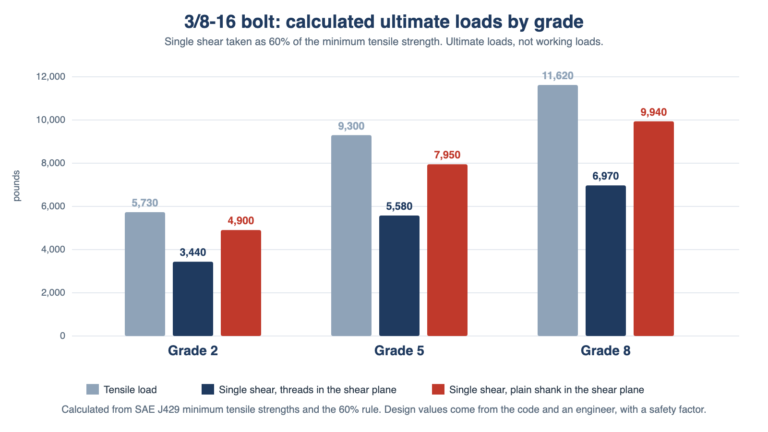
Under ASME B18.2.1, steel lag screws conform to the low carbon steel chemistry of ASTM A307 Grade A. Stainless lag screws conform to the chemistry of ASTM F593 Group 1 (304 stainless), and non-ferrous ones to ASTM F468. Because the standard asks for chemical composition only, a lag screw is not sold as grade 5 or grade 8 the way a hex bolt is. That is a point worth stating on a specification, because a buyer used to bolts may ask for a grade that does not apply.
| Finish | Best for | Note |
|---|---|---|
| Plain or zinc plated | Dry interior timber | Corrodes quickly outdoors and in treated timber |
| Hot-dip galvanized | Exterior work and preservative-treated timber | The usual outdoor finish. Match the washers |
| Stainless steel 304 | Outdoor and damp timber | General corrosion resistance |
| Stainless steel 316 | Coastal, marine and chemical exposure | Costs more than 304 |
Zinc-plated fasteners corrode quickly in treated timber and outdoor use. The salt-spray hours behind that statement are covered in do zinc screws rust.
Lag bolt vs hex bolt, carriage bolt and structural screw
Choose a lag screw when one side of the joint is inaccessible or the receiving part is timber. Choose a through-bolt when both sides are open, and a structural screw when the product has a listed design report.
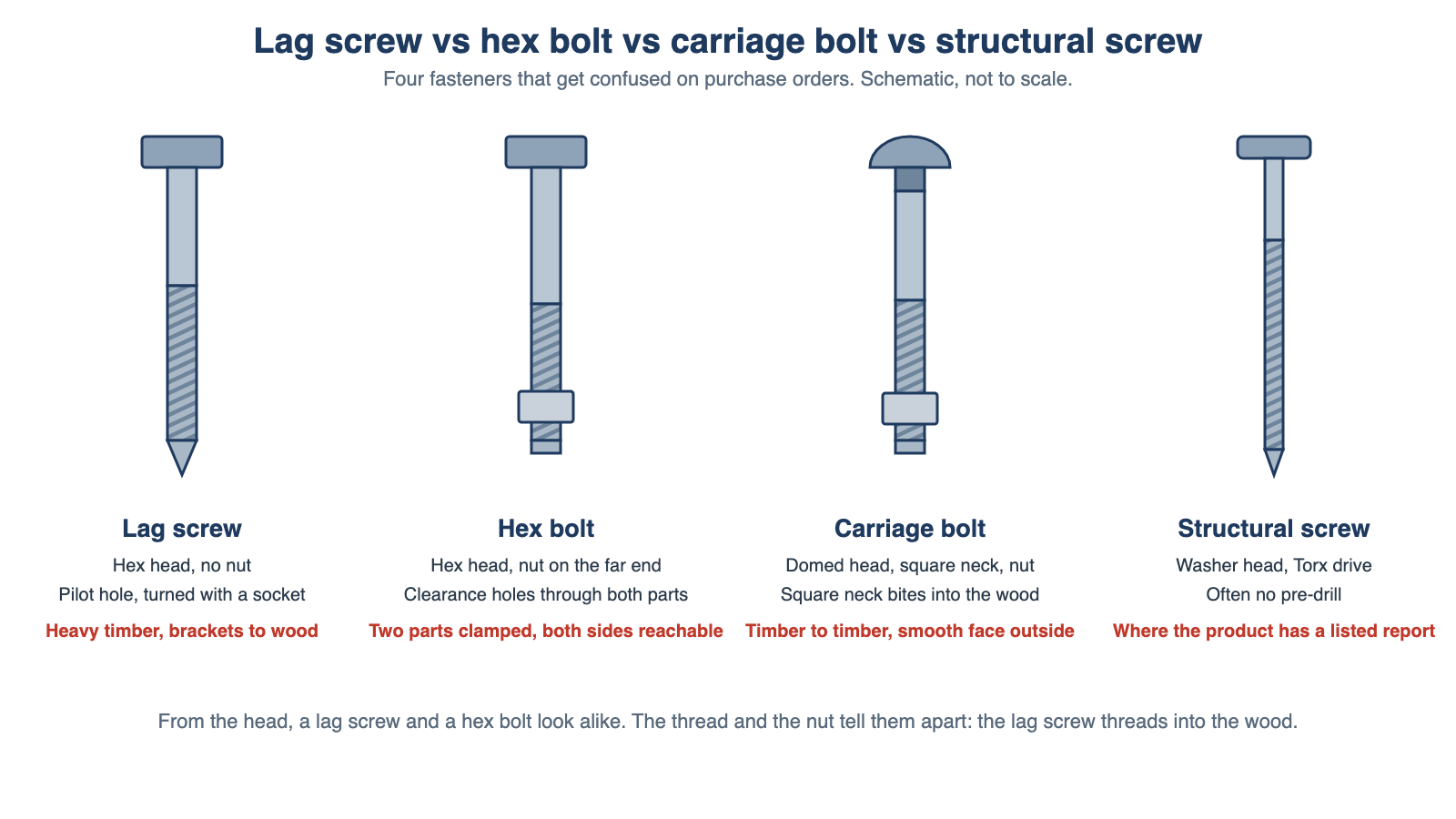
| Lag screw | Hex bolt (through-bolt) | Structural screw | |
|---|---|---|---|
| Needs a nut | No | Yes | No |
| Access | One side | Both sides | One side |
| Pre-drilling | Clearance and lead holes | Clearance holes through both parts | Often none, per the product report |
| Drive | Hex head, socket or spanner | Hex head and nut | Torx or hex, impact driver |
| Design basis | Prescriptive tables and the wood connection design | Bolt grade and the wood connection design | The product’s own evaluation report |
| Typical use | Heavy timber, brackets, ledgers | Beams, posts, anywhere both sides are reachable | Ledgers, beams, timber connectors |
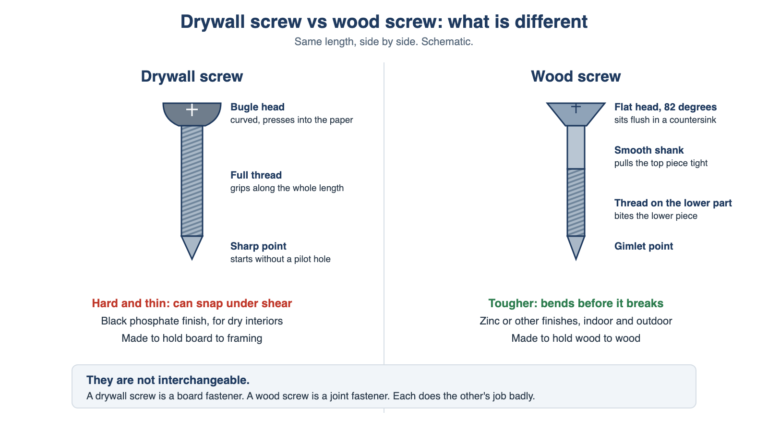
Structural screws have taken over many jobs that used to need lag screws because they drive faster, often without pre-drilling. Where a design or a code calls for a lag screw, though, a structural screw is not a free substitute. It follows its own report. Our range of structural wood screws covers that side. The difference between the bolt family and the screw family is also in nut vs bolt.
Common mistakes with lag bolts
- No lead hole. Driving a lag screw straight into dense timber splits the wood or twists the head off.
- One hole size for both parts. A full-size hole in the receiving timber leaves nothing for the thread to grip. A lead hole in the attached part stops the joint closing.
- Hammering it in. The thread is damaged and the capacity drops sharply.
- Skipping the washer. The head crushes the surface and loses its bearing.
- Too short a thread in the receiving timber. The thread must reach well into the base member, which means choosing the length for the thread, not for the head.
- Over-tightening. A lag screw turned until it spins in the hole has stripped the wood and no longer holds.
- Using it in concrete. A lag screw has nothing to grip in masonry without a shield or another anchor.
- Treating it as a grade 5 bolt. A lag screw has no bolt grade. Ask for the material and finish instead.
How to specify lag bolts on an order
A complete lag bolt order line names the head, the diameter, the length, the standard and the finish, so there is nothing left for the supplier to guess.
- Head type: hex (most common) or square.
- Nominal diameter: for example 3/8 in. or 1/2 in., or metric for DIN 571 hex head wood screws.
- Length measured from under the head to the tip.
- Thread length: the standard formula, or a stated length if the design needs a longer thread.
- Point: gimlet or cone.
- Material and finish: carbon steel zinc plated, hot-dip galvanized, or stainless 304 or 316.
- Standard: ASME B18.2.1 for inch sizes. Metric hex lag screws follow DIN 571.
- Pack: loose bulk, boxes or retail packs, and the carton marking.
Written out: Hex lag screw, ASME B18.2.1, 1/2 in. x 6 in., standard thread length, gimlet point, hot-dip galvanized. Nothing left to interpretation. The standard itself prints this order format in the same way, for example a hex lag screw to ASME B18.2.1 in stainless steel.
What a distributor should stock
For a distributor, lag screws are a small range with a clear core. A starter line normally covers the 1/4, 5/16, 3/8 and 1/2 in. diameters across the common lengths, in two finishes: zinc plated for interior work and hot-dip galvanized for outdoor and treated timber. Stainless in the smaller sizes follows for coastal customers.
- Quote by the specification line, not by “lag bolt” alone.
- List the socket size next to each diameter. Customers will ask, and the table above has the answer.
- Offer washers with the screws, in the same finish, so the corrosion match is not left to chance.
- Keep a structural screw alongside for customers who ask for the faster option, and be clear which one the design allows.
Pre-drilling is a recurring customer question, so a printed hole-size card in the pack saves returns. Pack artwork and cards are set up through an OEM hardware supplier.
Final thoughts
A lag bolt is a lag screw, and the work is in the holes, the thread and the finish: a clearance hole in the attached part, a lead hole in the timber, a washer under the head, and a wrench rather than a hammer. Specify head, diameter, length, thread, finish and standard, and the name in the quote stops mattering.
Frequently asked questions
Is a lag bolt the same as a lag screw?
Yes. Lag screw is the formal name used in ASME B18.2.1, and lag bolt is the common name for the same hex-head wood screw. In British and Commonwealth usage it is also called a coach screw. A quotation for any of the three names is for the same fastener, so confirm the head shape and that no nut is required.
What is a lag bolt used for?
A lag bolt fixes heavy timber connections from one side, such as beam to post joints, brackets and plates to wood, deck ledgers, fence and gate posts, swing-set frames and machinery on timber bases. It is chosen where a conventional wood screw is too small and a through-bolt cannot be used because the far side is not accessible.
Do lag bolts need a nut?
No. A lag bolt threads directly into the wood, so there is no nut. This is what separates it from a hex bolt, which passes through both parts and is tightened with a nut on the far side. A carriage bolt also needs a nut, so it cannot be substituted where only one side is accessible.
Do you need to pre-drill for lag bolts?
Yes. Drill a clearance hole the size of the shank through the attached part, and a smaller lead hole in the receiving timber sized to the thread root and the wood density. Hard woods need a larger lead hole than soft woods. Skipping the lead hole splits the wood or twists the head off the screw.
What socket size fits a 1/2 inch lag bolt?
A 3/4 inch socket. The hex head width across flats on a 1/2 inch lag screw is 3/4 inch under ASME B18.2.1. Other common sizes: 7/16 inch for a 1/4 inch lag screw, 1/2 inch for 5/16 inch, 9/16 inch for 3/8 inch, 15/16 inch for 5/8 inch and 1-1/8 inch for 3/4 inch.
How long is the thread on a lag screw?
The minimum thread length is half the nominal length plus 1/2 inch, or 6 inches, whichever is shorter. A 6 inch lag screw therefore has at least 3.5 inches of thread, and any lag screw of 11 inches or more has at least 6 inches. The smooth shank under the head makes up the rest of the length.
Can lag bolts be used in concrete?
Not directly. A lag screw has a wood thread and nothing to grip in masonry. It can be used with a lag shield, which is an expansion anchor set into the wall, but the shield is a separate anchor with its own rating and limits. For fixings into concrete, specify an anchor designed for it.
Are lag bolts stronger than wood screws?
Lag screws are larger in diameter, with a heavier shank and a hex head that can be driven with a wrench, so they suit heavier connections. Strength is not rated like a bolt grade, though. The standard fixes the steel chemistry only, and the capacity depends on the timber, the thread engagement and the connection design.
Can lag bolts be used in pressure-treated timber?
Yes, with the right finish. Preservative-treated timber corrodes zinc-plated steel quickly, so use hot-dip galvanized or stainless steel lag screws, and match the washers. For a safety connection such as a deck ledger, follow the fastener type and finish stated in the applicable code or the design, and do not mix metals between screw and washer.
What is the difference between a lag bolt and a carriage bolt?
A carriage bolt has a smooth domed head and a square neck that bites into the wood, and it is tightened with a nut through a clearance hole, so both sides must be reachable. A lag bolt has a hex head, threads into the wood, and needs no nut. They are not interchangeable, and the head shape tells them apart.
Sourcing lag bolts
Johnny’s Hardware supplies lag screws, also quoted as lag bolts and coach screws, with a hex head, a coarse wood thread and a pointed tip. Diameter and length follow the buyer’s specification, and material and finish are confirmed for the service conditions, for example zinc plated, hot-dip galvanized or stainless. They ship with the rest of the screw supplier range, including structural wood screws and decking screws, and with nuts and bolts, in one consolidated order.
Send the head type, diameter, length, thread requirement, finish, pack size and quantity, with a drawing or sample if you have one, and we will come back with specifications and carton data within 12 working hours. Samples are available before a bulk order.
– Johnny’s Hardware Team, QC Engineer