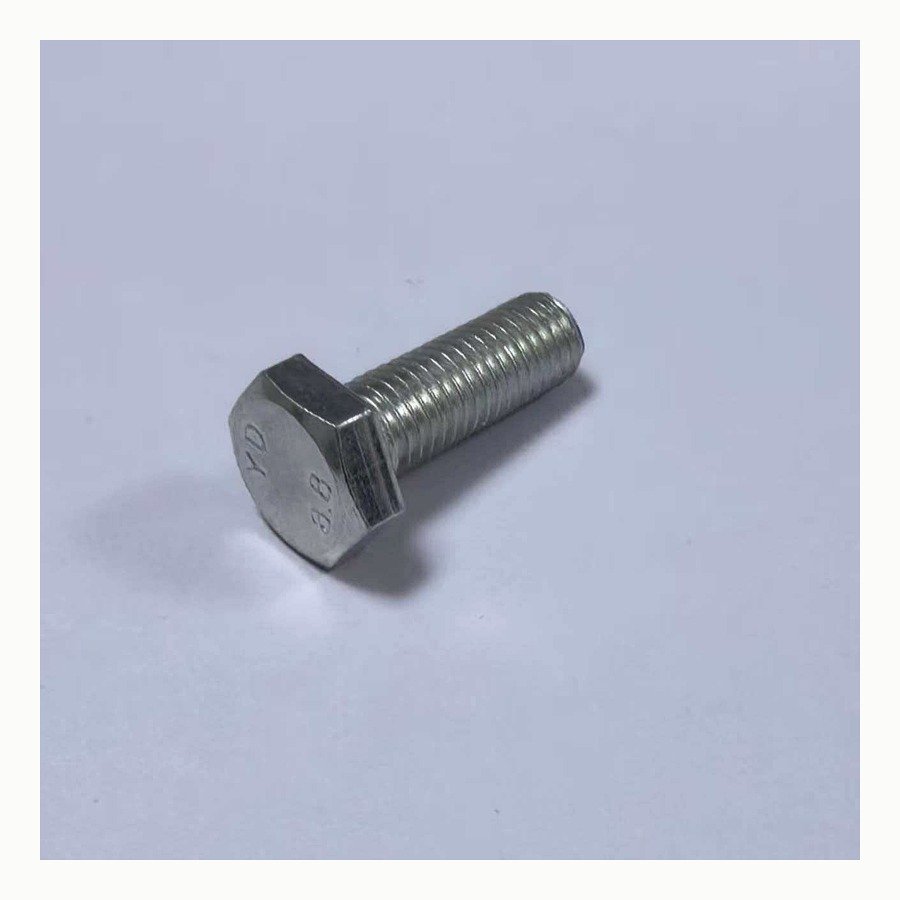
Johnny’s Hardware supplies bolts, nuts and washers as matched sets to importers, distributors and project buyers worldwide. Hex, carriage, eye, U-bolts, anchor bolts and threaded rod, with the nuts and washers that pair with them, in carbon steel property classes 4.8 through 12.9 and in stainless A2 and A4. Every quotation states the class, the standard and the finish, not just the size.
Bolts consolidate with screws, nails, anchors and wall plugs in one shipment, so a full fastener supplier range does not have to be split across several factories.
Send the sizes, property class, finish and pack format. Specifications, carton data and lead times back within 12 working hours.
Bolts we supply
| Bolt type | Typical sizes | Standards | Used for |
|---|---|---|---|
| Hex bolts / hex cap screws | M5–M24, 1/4″–1″ | DIN 931 / 933, ISO 4014 / 4017, ASME B18.2.1 | General structural and machinery assembly |
| Carriage bolts | M6–M16, 1/4″–5/8″ | DIN 603, ISO 8677 | Timber and steel where a smooth domed head is wanted |
| Anchor bolts | M8–M24 | ASTM F1554, ASTM A307 | Concrete foundations, base plates, structural steel |
| Eye bolts | M6–M20 | DIN 580, DIN 444 | Lifting points, rigging, tie-downs |
| U-bolts | M6–M16 | To drawing | Pipe and tube clamping, exhaust and chassis work |
| Threaded rod / studs | M6–M24, 1 m and 2 m lengths | DIN 975, DIN 976 | Suspension systems, cut-to-length applications |
Nuts and washers
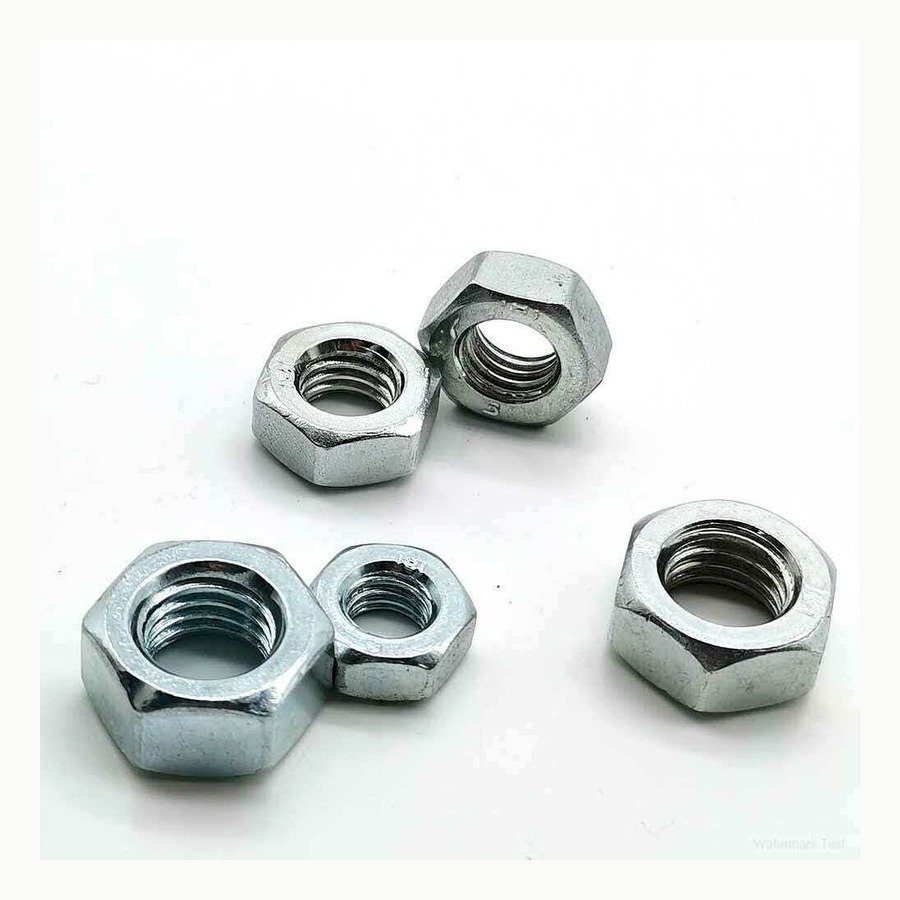
A bolt is rarely one line on an order. Most bolt programmes need the matching nut and at least one washer, which is why they are quoted together.
| Component | Types supplied | Standards |
|---|---|---|
| Hex nuts | Full, thin (jam), heavy | DIN 934, ISO 4032, ASME B18.2.2 |
| Lock nuts | Nylon insert (nyloc), all-metal prevailing torque | DIN 985 / 982, ISO 7040 / 7042 |
| Flange nuts | Serrated and plain flange | DIN 6923, ISO 4161 |
| Wing, cap and acorn nuts | Hand-tightened and finished fixings | DIN 315, DIN 1587 |
| Flat washers | Standard, large (fender), heavy | DIN 125 / 9021, ISO 7089 |
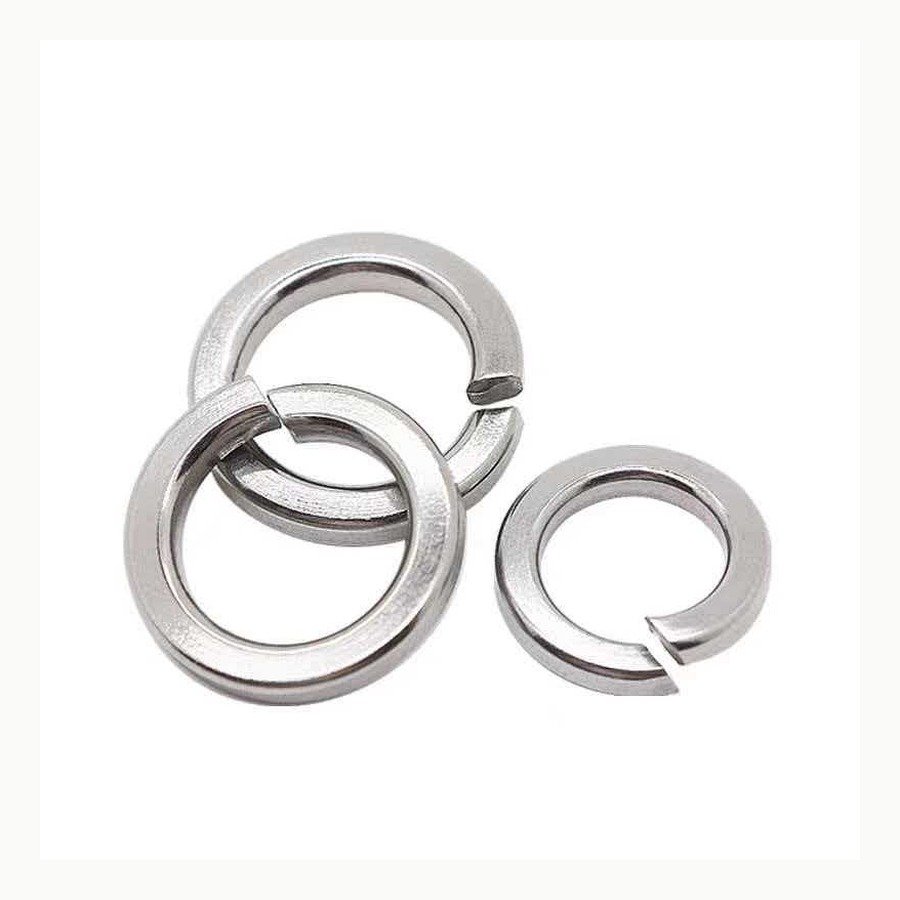
| Spring and lock washers | Split spring, internal and external tooth | DIN 127, DIN 6798 |
Nuts must match the bolt’s property class, not just its thread. A class 8.8 bolt needs a class 8 nut. Pairing a high-class bolt with a low-class nut moves the failure point to the nut and wastes the bolt’s rating entirely.
Property classes and grades
Grade is the specification that matters most on a bolt order, and the one most often left off it. Metric and imperial use different systems, and they do not map exactly onto each other.
| Metric class | Tensile strength | Nearest imperial | Head marking |
|---|---|---|---|
| 4.6 / 4.8 | 400 MPa | SAE Grade 2, ASTM A307 | “4.6” / “4.8” stamped |
| 8.8 | 800 MPa | SAE Grade 5, ASTM A325 | “8.8” stamped / 3 radial lines |
| 10.9 | 1000 MPa | SAE Grade 8, ASTM A490 | “10.9” stamped / 6 radial lines |
| 12.9 | 1200 MPa | No direct equivalent | “12.9” stamped |
| A2-70 / A4-80 | 700 / 800 MPa | 304 / 316 stainless | “A2-70” / “A4-80” stamped |
Thread pitch and size conversions are covered in our screw size chart. The metric class numbers are readable rather than arbitrary. In class 8.8 the first figure is nominal tensile strength in hundreds of megapascals, so 800 MPa; the second is the ratio of yield to tensile, so yield is 0.8 x 800 = 640 MPa. Class marking is defined by ISO 898-1, and every bolt we supply above class 4.8 carries it on the head. The class also sets the tightening torque — see our bolt torque chart for values by size, grade and friction condition.
Materials and finishes
| Material / finish | Suitable for | Notes |
|---|---|---|
| Carbon steel, zinc plated | Interior, sheltered exterior | The default for general assembly |
| Carbon steel, hot-dip galvanised | Exterior, structural steelwork | Nut threads are tapped oversize to clear the coating |
| Carbon steel, black oxide or plain | Interior, oiled machinery | Minimal corrosion protection |
| Stainless A2 (304) | Exposed exterior, food and hygiene | Non-magnetic, no rust staining |
| Stainless A4 (316) | Coastal, marine, chemical | Molybdenum resists chloride attack |
| Dacromet / geomet coatings | Automotive, high salt exposure | Available on request for volume orders |
Stainless bolts and stainless nuts can gall — the threads cold-weld under friction and seize before the joint is tight. On A4 assemblies above M10, specify an anti-seize compound or a nut in a different stainless grade.
Order terms
| Item | What we support |
|---|---|
| Minimum order | Quoted per SKU — bolts, nuts and washers combine toward one workable total |
| Packing | Bulk carton, inner boxes, small packs, blister, counted or by weight |
| Assortment kits | Bolt, nut and washer sets in a single retail or trade pack |
| Private label | Your artwork, barcodes, multilingual labels and carton marks |
| Mixed containers | Combined with screws, nails, anchors, tools and PPE in one shipment |
| Documents | Packing list, commercial invoice, QC report, loading photos; mill certificates on request |
Private label programmes and drawing-based parts are handled through our OEM hardware supplier service.
Quality control
- Dimensional — diameter, length, thread pitch and head dimensions sampled against the cited standard
- Thread fit — go/no-go gauging so bolts and nuts assemble without binding
- Class marking — head markings checked against the ordered property class
- Finish — coating type and coverage confirmed, including oversize tapping on hot-dip nuts
- Loading — photographs taken at container loading and supplied with the documents
Frequently asked questions
What is your minimum order for bolts and nuts?
It is quoted per SKU rather than as one figure across the range, and bolts, nuts and washers count toward the same total. Most buyers combine several sizes and classes to reach a workable order without holding excess stock of any one line. Send the intended mix and we will confirm what is viable.
What does class 8.8 mean on a bolt?
The first number is nominal tensile strength in hundreds of megapascals, so 8.8 means 800 MPa. The second is the ratio of yield strength to tensile strength, so yield is 0.8 x 800 = 640 MPa. The system is defined by ISO 898-1, and the marking appears on the bolt head.
Do nuts need to match the bolt grade?
Yes. A class 8.8 bolt requires a class 8 nut, and a 10.9 bolt requires a class 10 nut. Pairing a high-class bolt with a low-class nut moves the failure point to the nut threads and wastes the bolt’s rating. We quote matched sets by default for exactly this reason.
Can you supply both metric and imperial sizes?
Yes. Metric bolts follow DIN and ISO standards, imperial follow ASME and ASTM. The two systems are not interchangeable, including the grade systems, so state which one the order uses. Where a market handles both, we quote them as separate lines rather than converting between them, because a near-equivalent grade is not the same as a matching one.
What is the difference between a hex bolt and a hex cap screw?
Dimensionally they are close, and many markets use the terms interchangeably. Strictly a hex cap screw is manufactured to tighter tolerances with a chamfered washer face, while a hex bolt is a looser commercial specification. If a drawing cites ASME B18.2.1, quote the cap screw tolerance rather than assuming the commercial bolt will pass inspection.
Why do stainless nuts seize on stainless bolts?
It is galling: the threads cold-weld under friction because stainless does not form a protective oxide fast enough while sliding. It happens most on A4 assemblies above M10 and when driving fast. Anti-seize compound, slower driving, or pairing grades that differ slightly all reduce it. Once a nut has galled it usually cannot be backed off, so the fixing has to be cut out.
Are hot-dip galvanised nuts a different size?
The nominal size is the same but the thread is tapped oversize to clear the zinc on the bolt, which is thick on hot-dip work. This is normal and specified in the standard. It also means hot-dip nuts should not be substituted onto plated bolts, where the fit becomes loose.
Can you supply mill certificates?
Yes, on request at quotation stage. Material certificates and test reports are arranged during production rather than afterwards, so tell us at the enquiry if the end customer or the market requires them. Requesting documentation after shipping is slower and sometimes not possible, because the material batch has already left the mill’s traceable window.
Choosing a bolt supplier
Most bolt problems come from an incomplete specification rather than a bad price: a class that was never stated, a nut that does not match the bolt it ships with, a hot-dip nut fitted to a plated bolt. Naming the size, property class, standard and finish together is what prevents all three. Send those four and the quotation comes back matched to the job.
Request a quotation
Send the bolt types, sizes, property classes, finishes and pack formats you need, and whether nuts and washers should be quoted as matched sets. We come back with specifications, carton data, shipping weights and lead times within 12 working hours.
Matched sets, mixed containers and private label. Samples available before bulk production.