Nails win on shear strength and installation speed. Screws win on holding power and reversibility. Neither replaces the other, and a hardware range that stocks only one of them will lose sales in both directions — the customer who came in for framing nails still needs deck screws before the job is finished, and will buy them somewhere.
That is the short answer. The longer answer matters if you are building a fastener range for a retail shelf, a trade counter or a mixed export container, because the two products fail in completely different ways — and buyers who substitute one for the other create warranty problems that come straight back to the distributor.
The mechanical difference is shear versus withdrawal
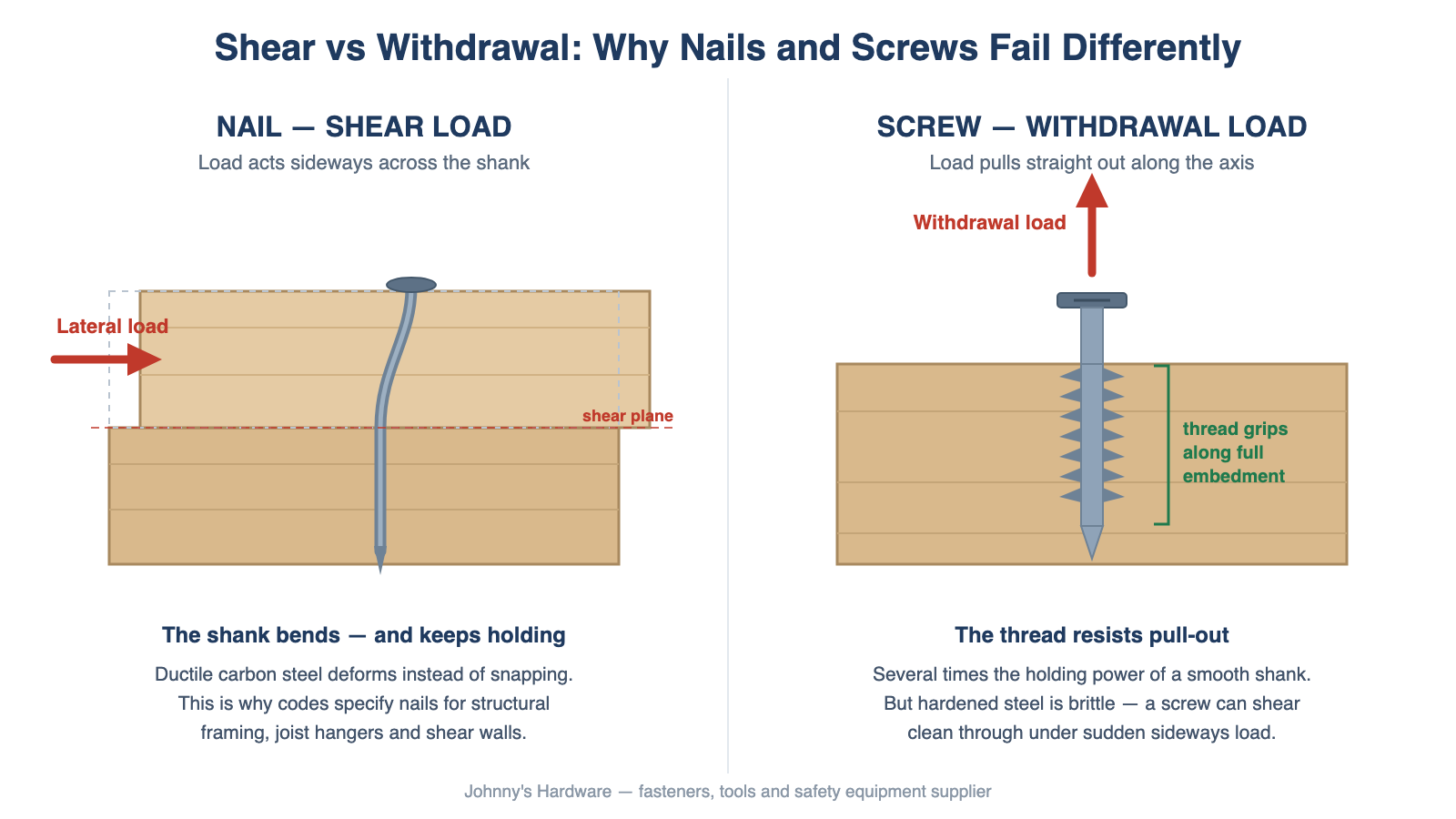
Almost every practical difference between nails and screws comes from one fact: a nail shank is ductile, and a hardened screw shank is not.
A nail bends before it breaks. Under a sudden sideways load — a wall racking in wind, a floor joist flexing — a nail deforms and keeps holding. This is shear strength, and it is why building codes across the US, EU and Australia specify nails for structural framing connections, joist hangers and shear walls.
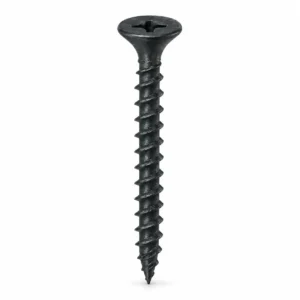
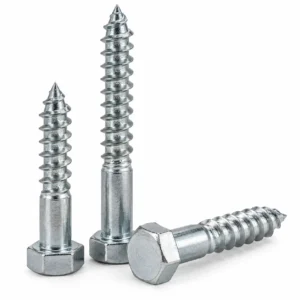
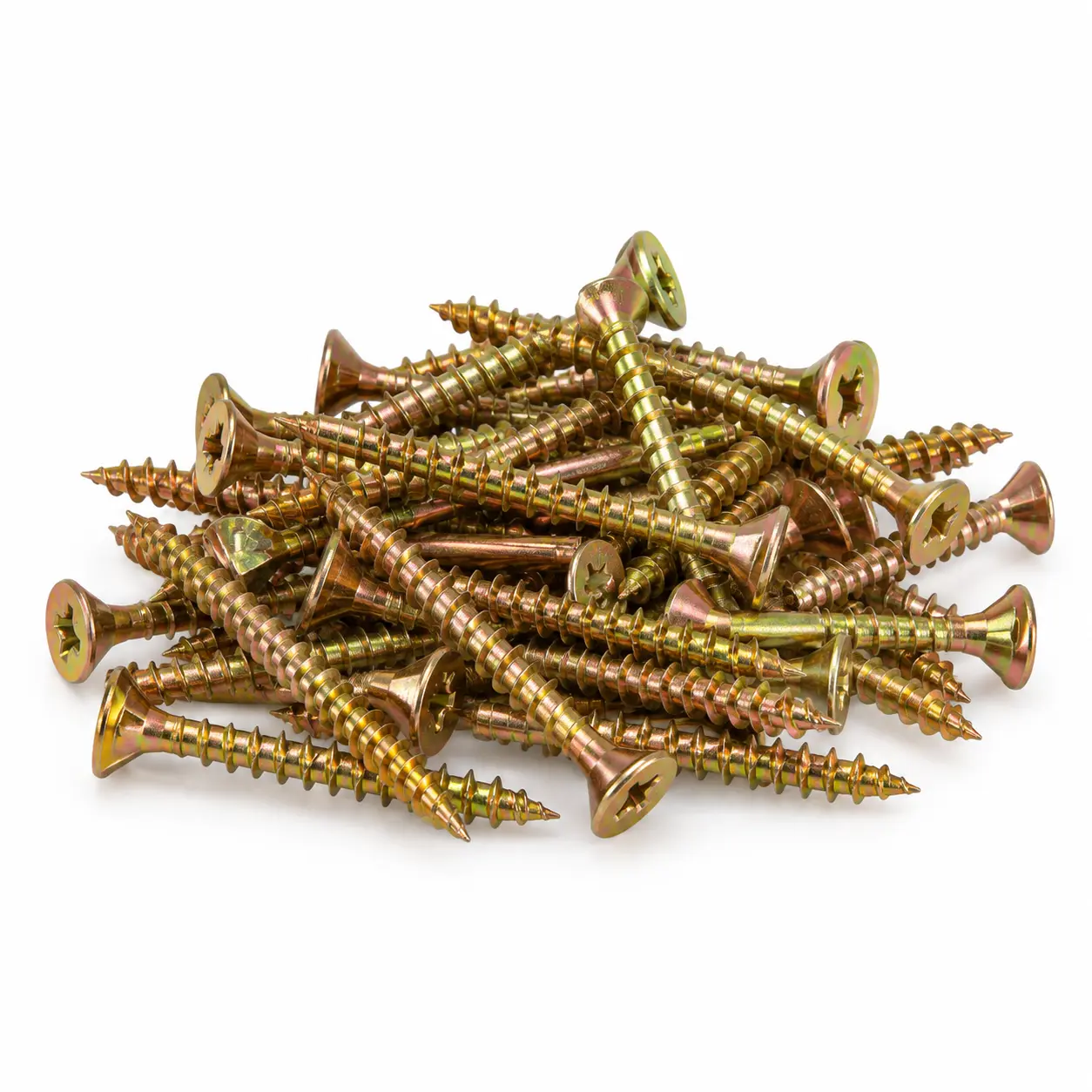
A screw resists being pulled straight out. The thread bites into the wood fibre and creates mechanical grip along the whole embedded length. This is withdrawal resistance, and a screw typically delivers several times what a smooth-shank nail of the same diameter can manage.
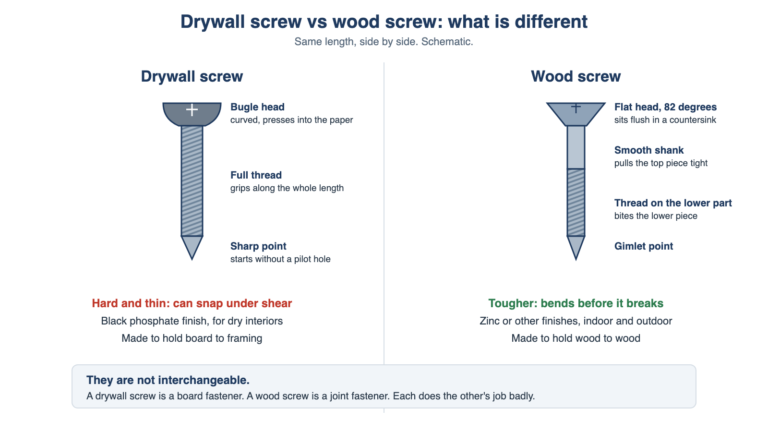
The trade-off is brittleness. Most screws are heat-treated to cut their own thread, and that hardening makes them snap rather than bend under sudden lateral load. A drywall screw used in a framing connection can shear clean through with no visible warning.
Side-by-side comparison
| Property | Nails | Screws |
|---|---|---|
| Shear strength | High — shank bends instead of snapping | Lower — hardened shanks can fracture |
| Withdrawal resistance | Low on smooth shank; ring and screw shanks improve it | High — thread grips along full embedment |
| Installation speed | Very fast — a framing nailer drives 2-3 per second | Slower — each screw must be driven individually |
| Removable | No — removal usually damages the material | Yes — back out and reuse the hole |
| Splitting risk | Higher near board ends; thinner shanks reduce it | Lower with a pilot hole |
| Unit cost | Lower — sold by weight, simple wire drawing process | Higher — thread rolling and heat treatment add cost |
| Typical retail unit | 1 kg / 5 kg boxes, collated strips and coils | Blister packs, tubs, counted boxes |
Where nails are the right specification
Nails stay the default anywhere the connection carries lateral load or where labour time dominates cost.
- Structural framing — wall plates, studs, rafters, floor joists. Codes are written around nail performance, and a framing crew using a pneumatic nailer will outpace a screw gun several times over.
- Sheathing and subfloor — large panel areas where fastener count is high and each individual connection carries modest load.
- Crates, pallets and packaging — the fastener is consumed once and never removed, so reversibility has no value and unit cost decides.
- Trim and finish carpentry — small-head nails leave a hole that fills and paints invisibly. A screw head cannot be hidden the same way.
Where screws are the right specification

- Anything that may come apart again — cabinetry, furniture assembly, fixtures, access panels, temporary formwork.
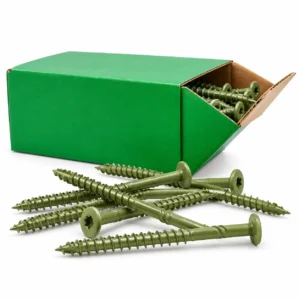
- Decking boards — timber cups and moves with moisture, and withdrawal resistance is what stops boards lifting. Note the distinction: deck boards take screws, while the deck frame underneath usually takes nails or purpose-rated structural screws.
- Sheet goods into studs — plasterboard, plywood panelling, backer board. Thread grip beats a smooth shank in thin sheet material.
- Hardwood and dense engineered board — where a nail would deflect or split the workpiece and a pilot hole plus screw gives a controlled result.
What this means when you build a product range
For an importer or hardware distributor, the practical conclusion is not “which is better”. It is that nails and screws sell to different moments in the same job, and a shelf holding only one of them sends the customer to a competitor for the other half.
A workable minimum range for a general hardware or DIY channel looks like this:
| Job stage | Fastener to stock | Why it sells |
|---|---|---|
| Structure | Common nails, framing nails | High volume, repeat trade purchase |
| Panels and boards | Drywall screws, wood screws | Broad DIY appeal, good margin per pack |
| Trim and second fix | Finish nails, brad nails, lost-head nails | Low unit cost, high attachment rate to nailers |
| Fine woodworking | Pin nails | Small niche, very little competition on shelf |
| Packaging and crating | Box nails | Steady industrial demand outside the DIY cycle |
If you are sourcing both halves of that range from one factory, the container maths also improves. Mixing nail cartons and screw cartons in a single shipment is the normal way importers avoid holding two separate supplier relationships and two sets of minimum order quantities — something we cover in more detail on our OEM hardware supplier page.
The screw half of that range splits further by application, head shape and drive type — our guide to the types of screws covers which lines are worth carrying and why.
Nail types worth carrying, and what each one is for
Nails are not one product. The seven families below cover most of what a general hardware channel needs, and they are deliberately different enough that they rarely cannibalise each other on the shelf.
| Nail type | Gauge / shank | Primary use | |
|---|---|---|---|
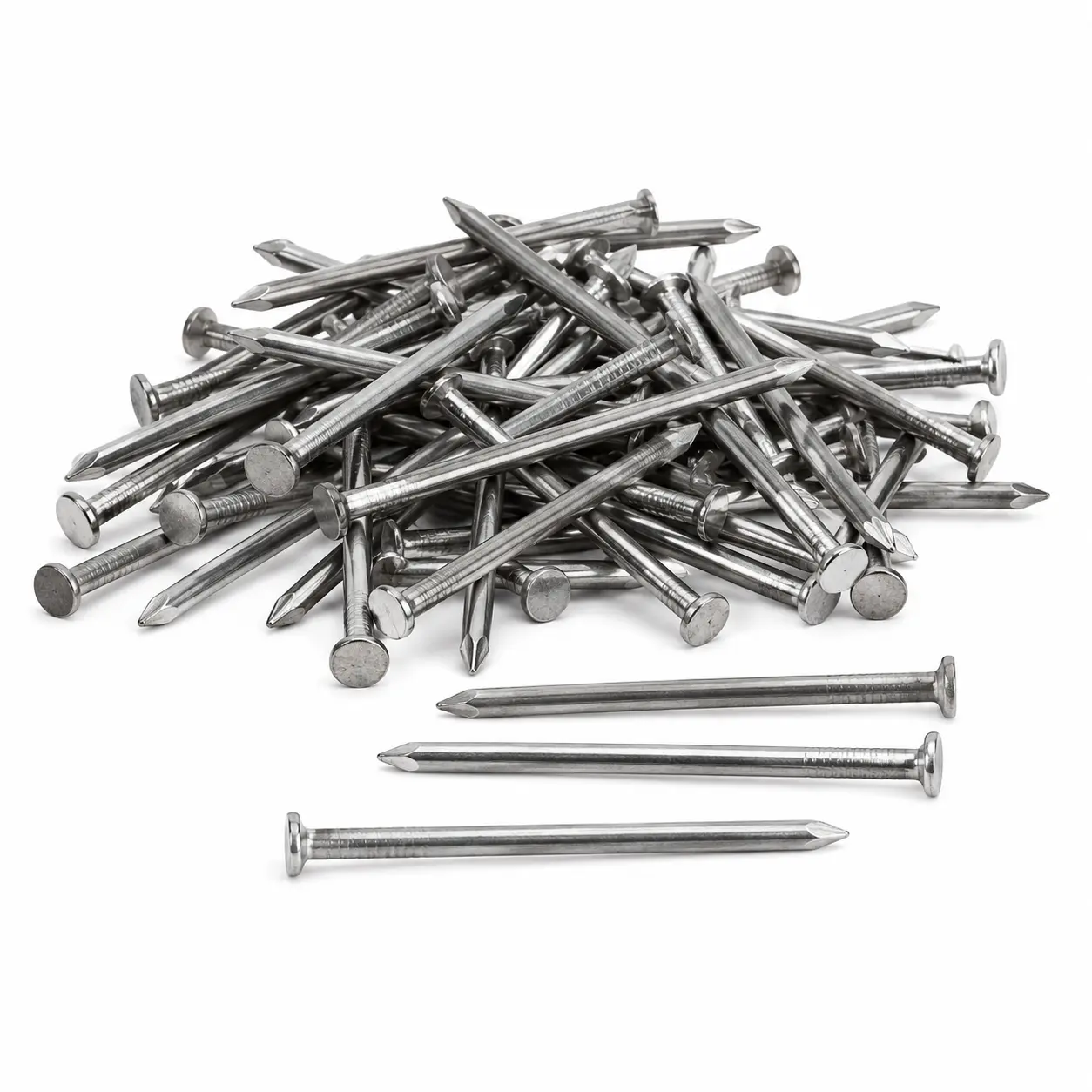 | Common nails | Thick shank, wide flat head | Rough carpentry, timber construction |
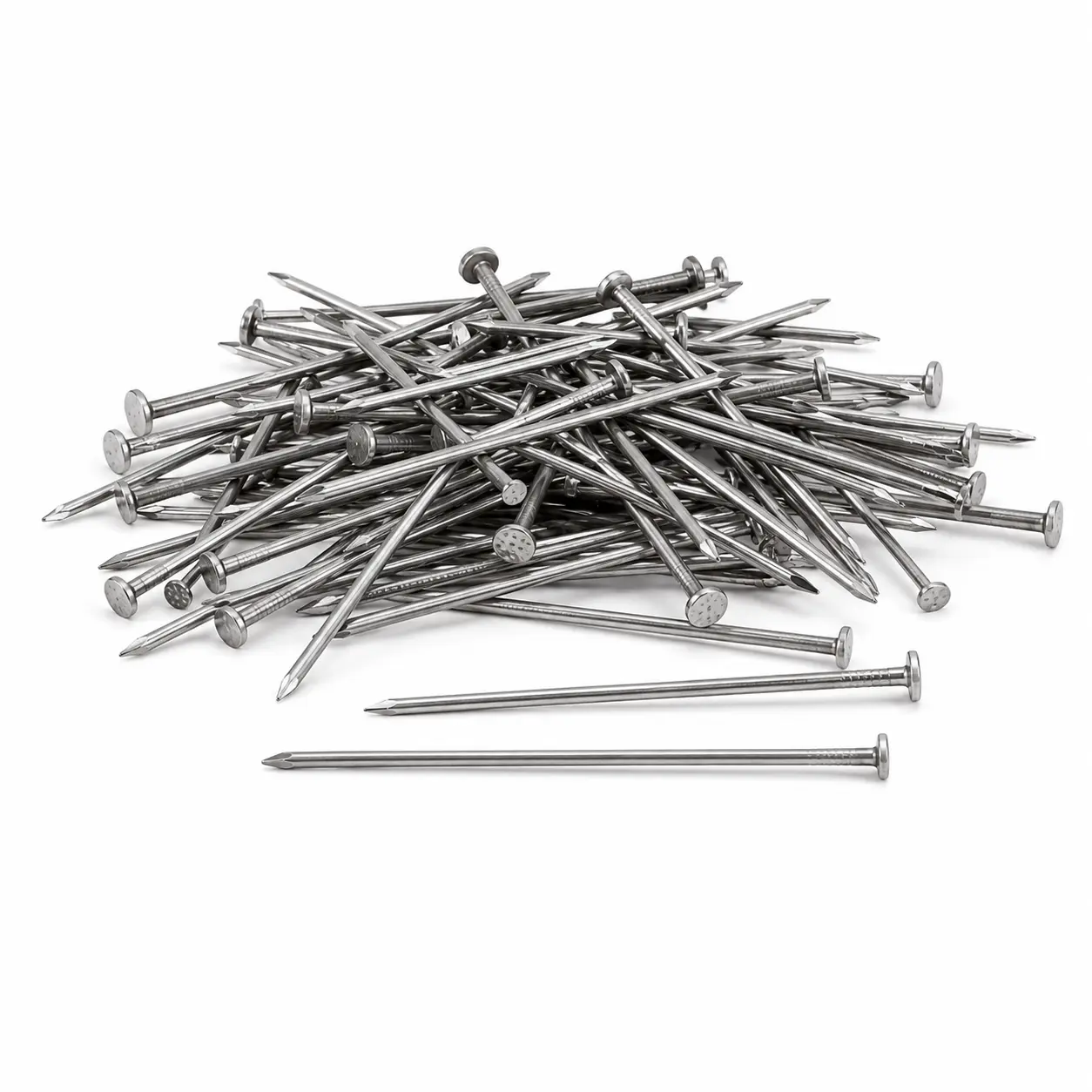 | Box nails | Thinner shank than common | Crates, boxes, light frames — reduces splitting |
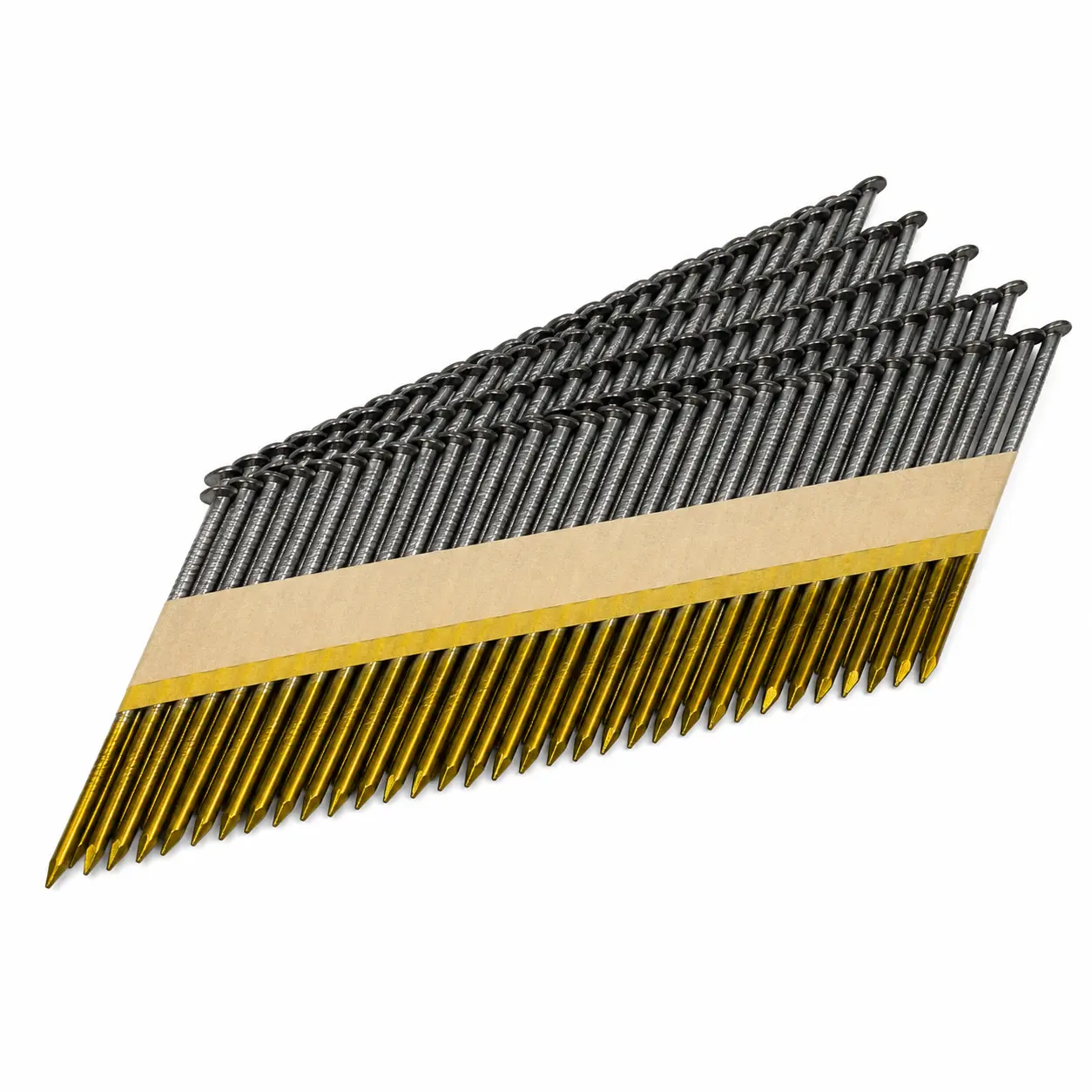 | Framing nails | Collated; smooth, ring or screw shank | House framing, rafters, floor joists |
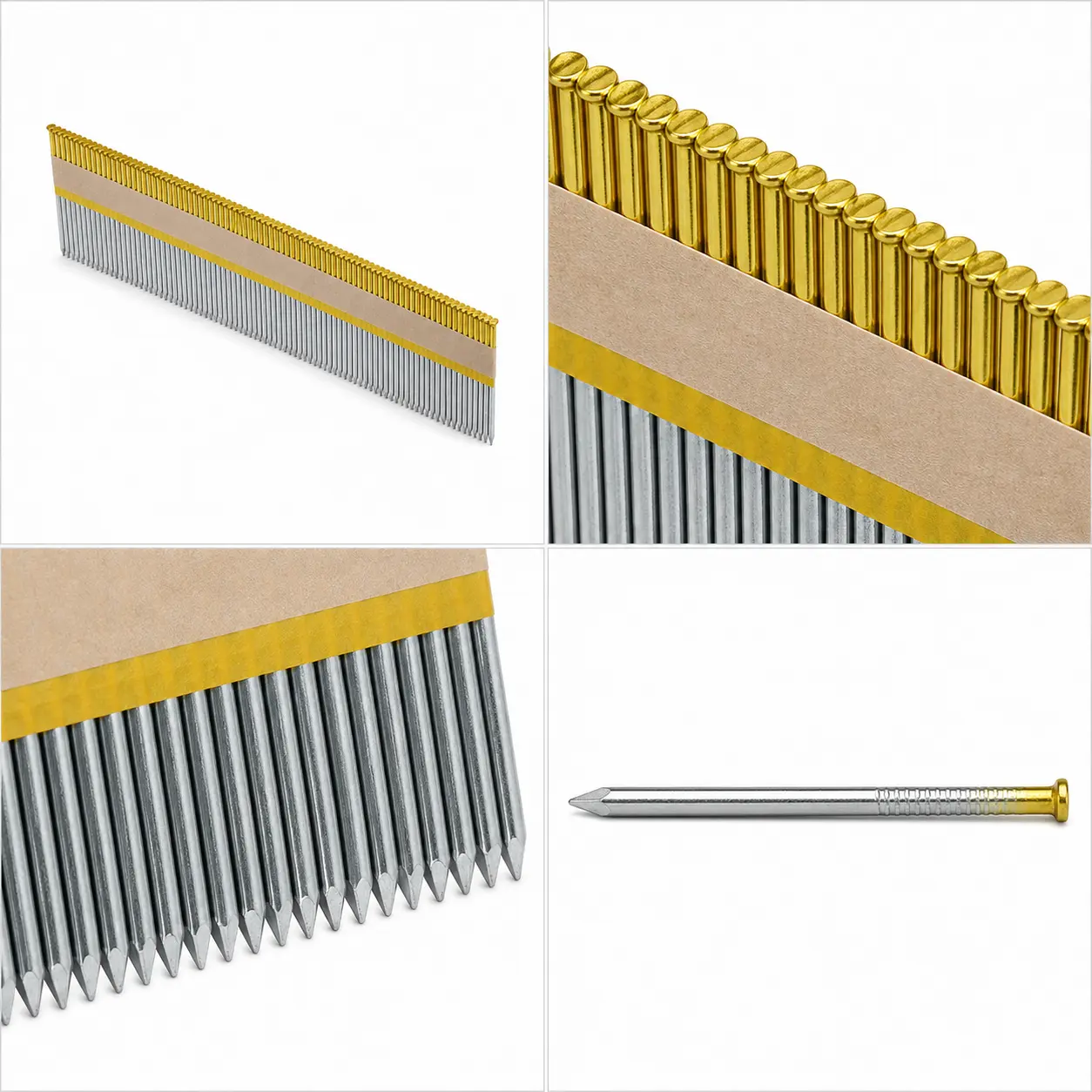 | Finish nails | 15-16 gauge, small head | Baseboard, casing, crown molding |
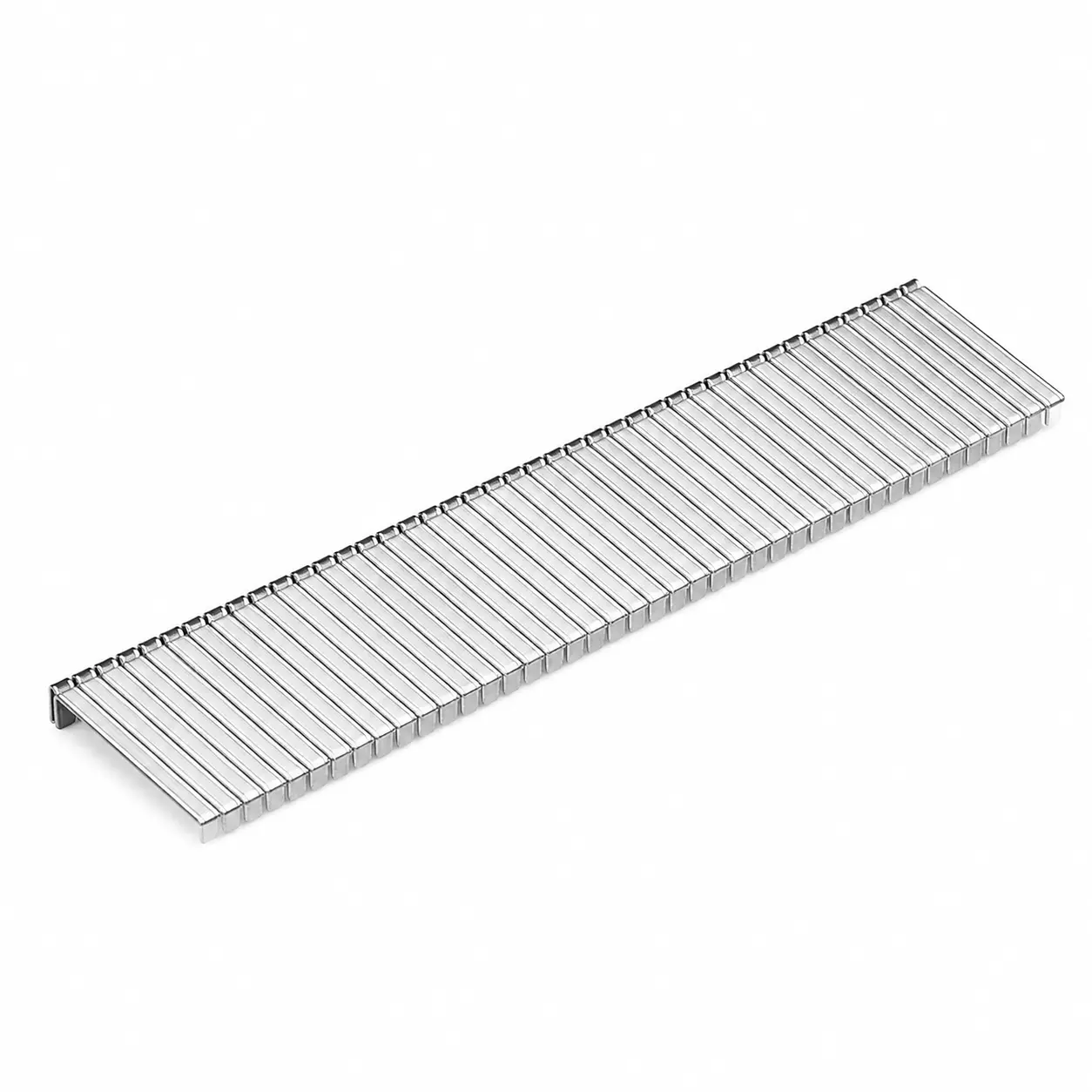 | Brad nails | 18 gauge | Thin trim, picture frame backing, light panels |
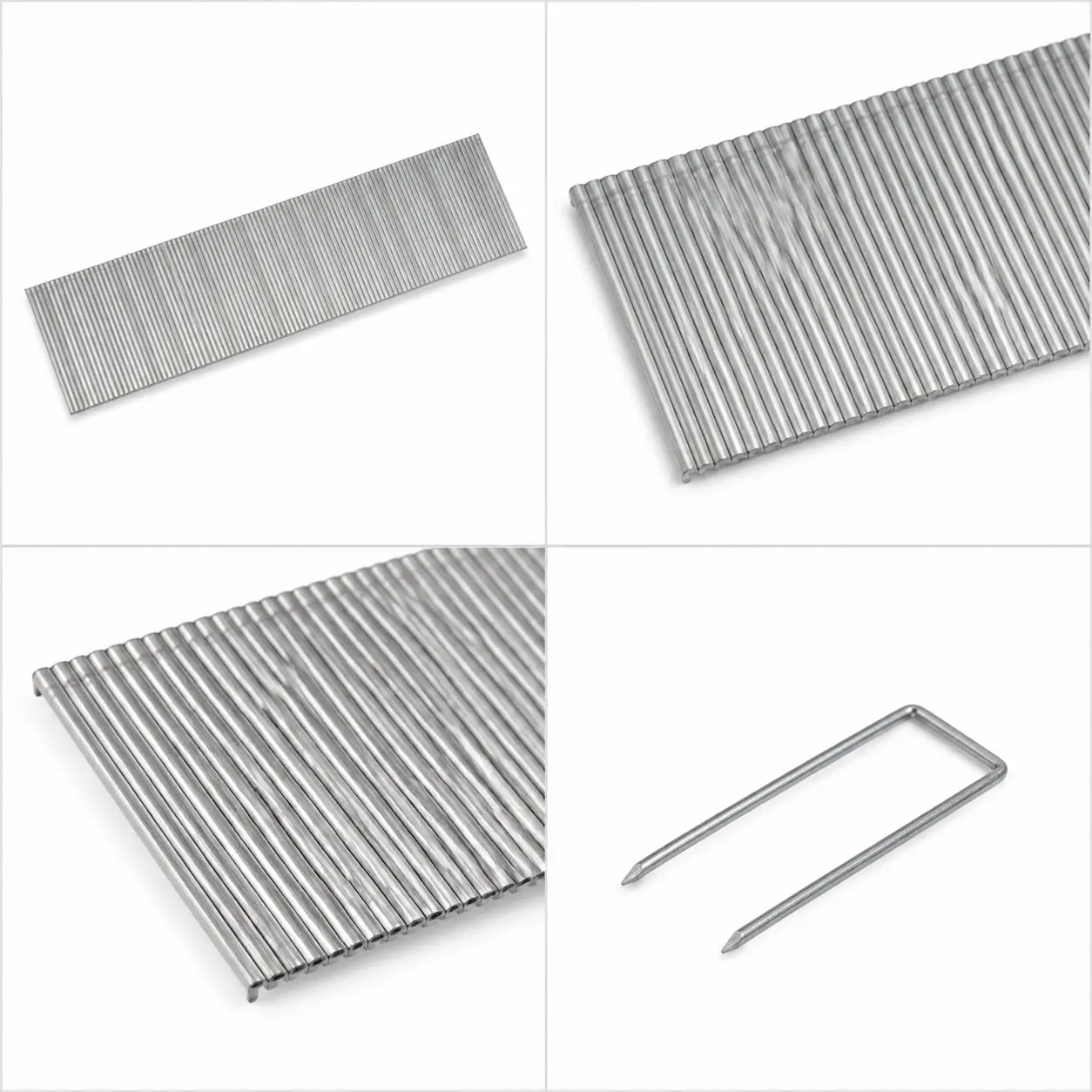 | Pin nails | 23 gauge, headless | Fine woodworking, near-invisible fixing |
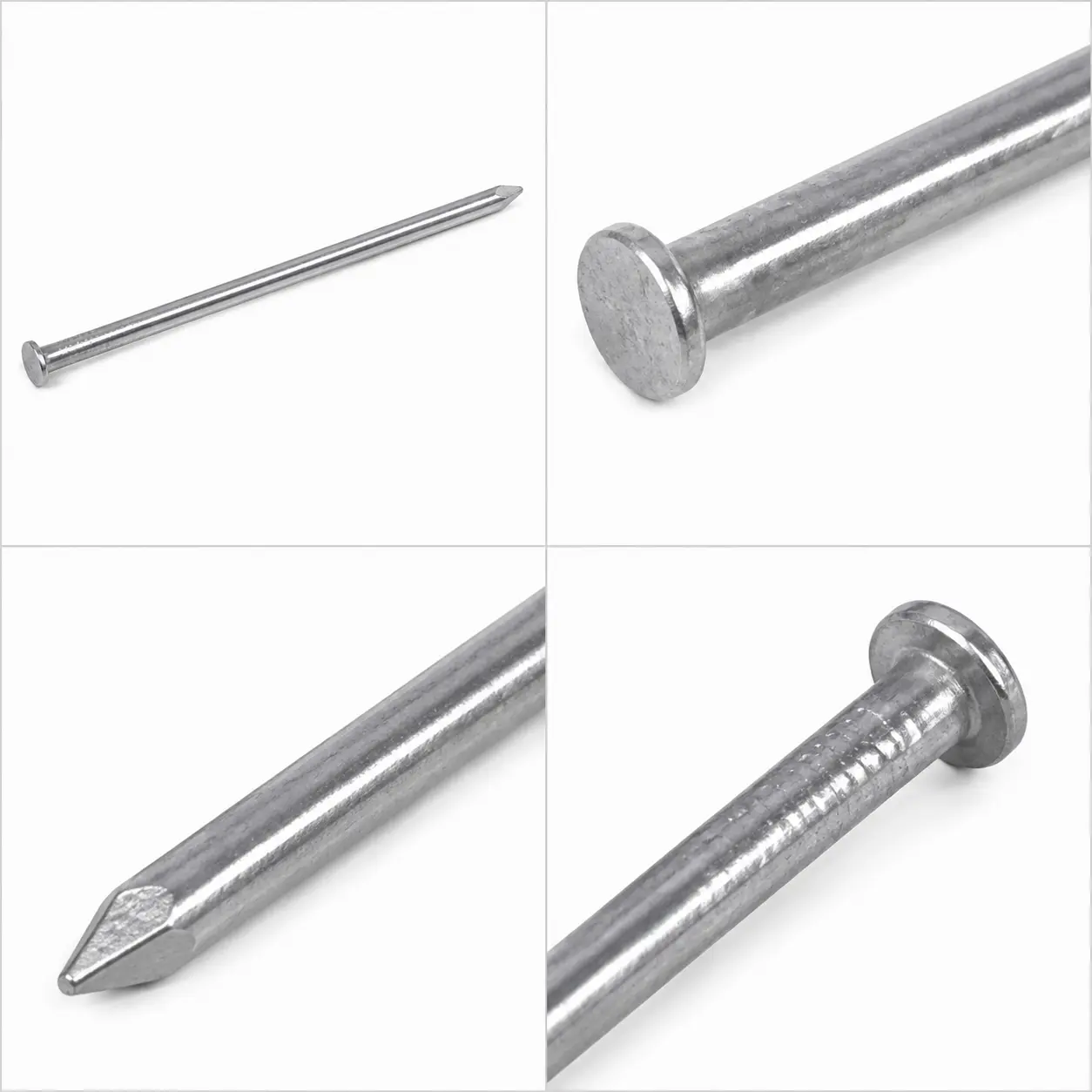 | Lost-head nails | Countersunk head | Skirting, architraves, cabinetry — punched and filled |
Note the gauge convention, because it catches buyers out: for nails, a higher gauge number means a thinner nail. A 23 gauge pin nail is far finer than an 18 gauge brad, which is in turn finer than a 16 gauge finish nail. Screws run the opposite way, as set out in our screw size chart.
Coating matters more than the nails vs screws decision
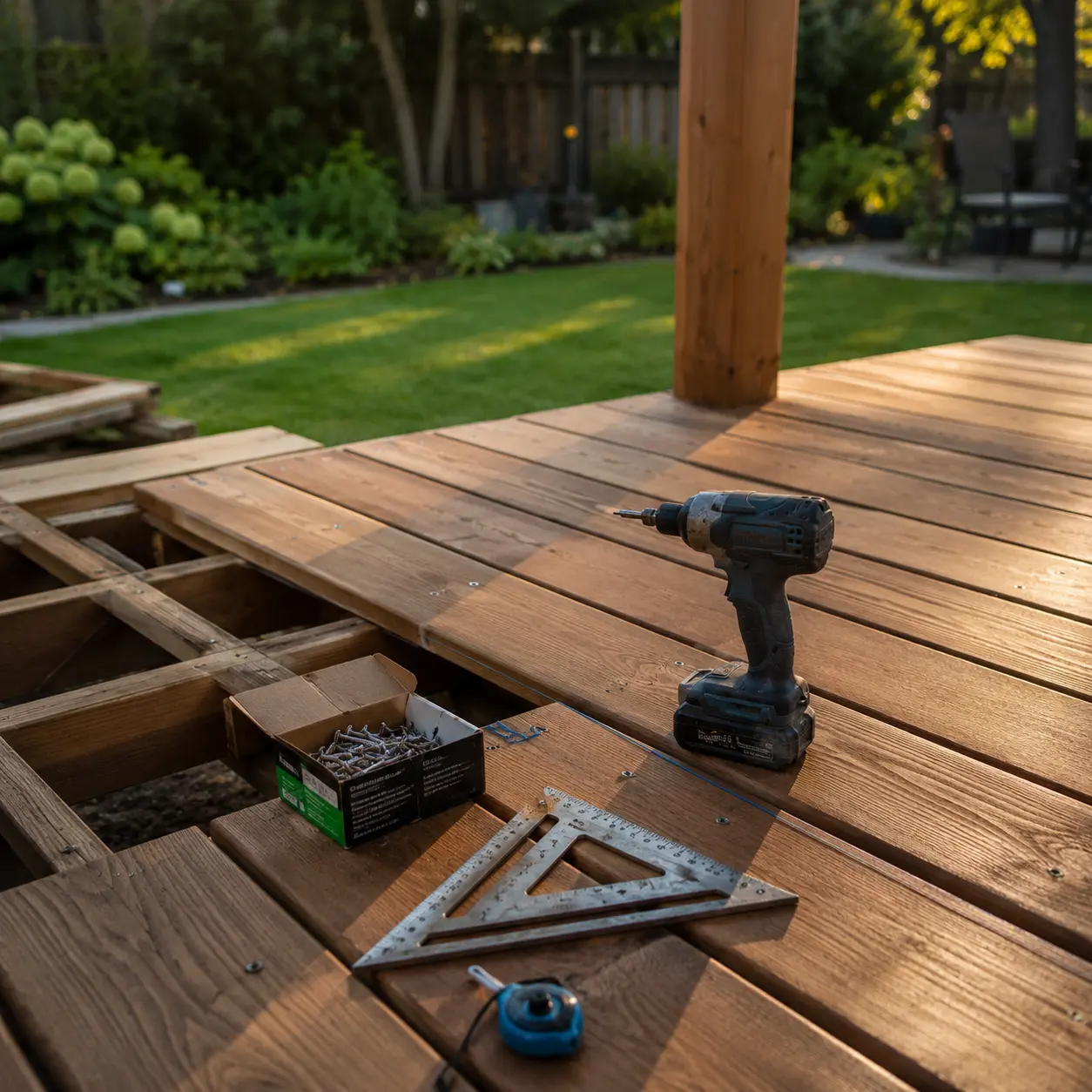
One point buyers underweight: for outdoor work, the finish on the fastener usually determines service life more than the choice between nail and screw.
| Finish | Suitable for | Notes |
|---|---|---|
| Bright / plain carbon steel | Interior only | No corrosion protection at all |
| Electro-galvanised (zinc plated) | Interior, sheltered exterior | Thin coating; will rust in sustained damp |
| Hot-dip galvanised | Exterior, treated timber | Much thicker zinc layer; the practical outdoor default |
| Stainless AISI 304 | Exposed exterior, visible fixings | No staining or streaking on the timber |
| Stainless AISI 316 | Coastal and marine | Molybdenum addition resists chloride attack |
Pressure-treated timber is the case that catches people out most often. Modern copper-based preservatives are aggressive toward plain and lightly zinc-plated steel, so hot-dip galvanised or stainless is the minimum specification regardless of whether the job calls for a nail or a screw.
FAQ
Are screws stronger than nails?
Not in a single sense. Screws are stronger in withdrawal — resisting being pulled straight out. Nails are stronger in shear — resisting sideways load — because the shank bends rather than fracturing. The correct fastener depends on which load the connection actually carries, which is why building codes name nails for structural framing and not screws.
Can I use screws instead of nails for framing?
Not with ordinary screws. Standard drywall and wood screws are hardened and can shear under sudden lateral load, with no visible warning before they go. Structural framing needs either nails or screws specifically rated and certified for structural use. Substituting an unrated screw into a code-specified connection is a warranty problem waiting to happen.
Why do decks use screws on the boards but nails in the frame?
Deck boards move as moisture changes and try to lift, which is a withdrawal load — screws hold that far better. The frame beneath carries lateral and racking loads, which is a shear situation better suited to nails or rated structural screws. Same deck, two different load types, two different fasteners, and both need stocking.
Which is cheaper to stock, nails or screws?
Nails, on a per-unit basis. They are drawn from wire with far less processing, while screws add thread rolling and heat treatment. Nails are usually sold by weight and screws by count, which is worth remembering when comparing quoted prices — a price per kilo and a price per thousand are not directly comparable.
What should I stock first if shelf space is limited?
Start with common nails, framing nails, drywall screws and wood screws. Those four cover the bulk of both trade and DIY demand. Trim products such as brad and finish nails are a strong second wave once you know your customers own the matching nailers, because without the tool the nails will not move off the shelf.
Can nails and screws ship in the same container?
Yes, and for most importers that is the efficient route. Mixed-SKU consolidation lets you hit a workable container fill without over-ordering any one line. It also keeps one supplier relationship instead of two, which matters more than it sounds when specifications or delivery dates change. See our fastener supplier range, or the screw supplier page for the screw half of the order.
Do nails or screws hold better in treated timber?
Neither choice matters as much as the coating. Copper-based preservatives attack plain and lightly zinc-plated steel, so both nails and screws going into pressure-treated lumber should be hot-dip galvanised or stainless. A correctly specified nail will outlast a cheaply plated screw in that application, and the reverse is equally true.
Can nails be removed and reused like screws?
Not cleanly. Backing a screw out reuses the same hole and leaves the material largely intact, which is why screws suit anything that comes apart again — cabinetry, fixtures, access panels. Pulling a nail usually tears the surrounding fibre and damages the surface. Duplex nails, with their double head, are the exception for temporary work.
Final thoughts
The question is rarely which fastener is better; it is which load the connection carries. Shear points to nails, withdrawal points to screws, and most real jobs contain both within a few metres of each other. A shelf that reflects that reality sells twice to the same customer, which is the whole commercial argument for carrying both.
Sourcing both sides of the range
Johnny’s Hardware supplies nails, screws, bolts and nuts, washers, anchors and wall plugs from China to importers, distributors and DIY retail programs. Because both product families come from one sourcing route, you can build a complete fastener shelf without splitting the order across two suppliers or absorbing two separate minimum order quantities.
Tell us the SKUs and pack formats you need and we will come back with specifications, carton data and lead times within 12 working hours.
– Johnny’s Hardware Team, Sourcing Advisor