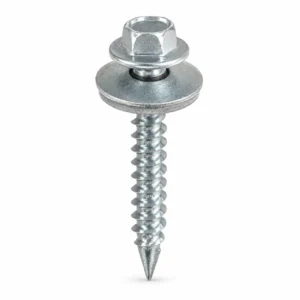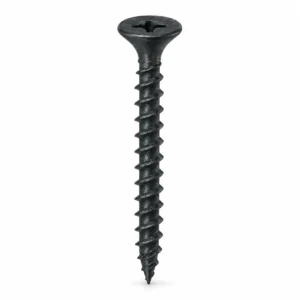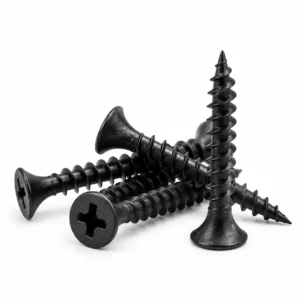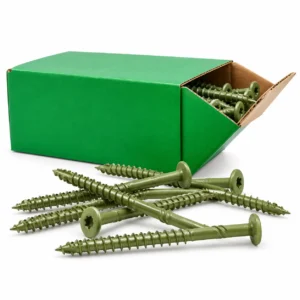
A drywall screw holds a board to a frame. A wood screw holds one piece of wood to another. They look similar, and they are made for different jobs, which is why a drywall screw in a loaded wood joint is a recognised risk.
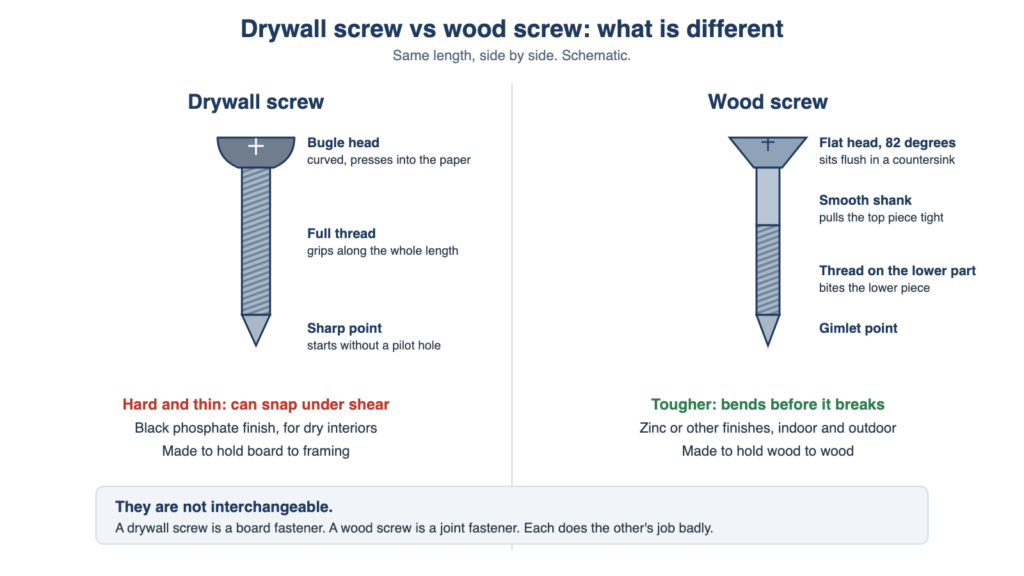
Drywall screws and wood screws are not interchangeable. Drywall screws have a bugle head, a full thread and hard, thin steel, which suits holding board to framing. Wood screws have a flat head, a smooth shank and tougher steel, which suits joining wood to wood.
Drywall screws vs wood screws at a glance
The differences are in the head, the thread, the shank and the steel. Each one follows from the job the screw is made for.
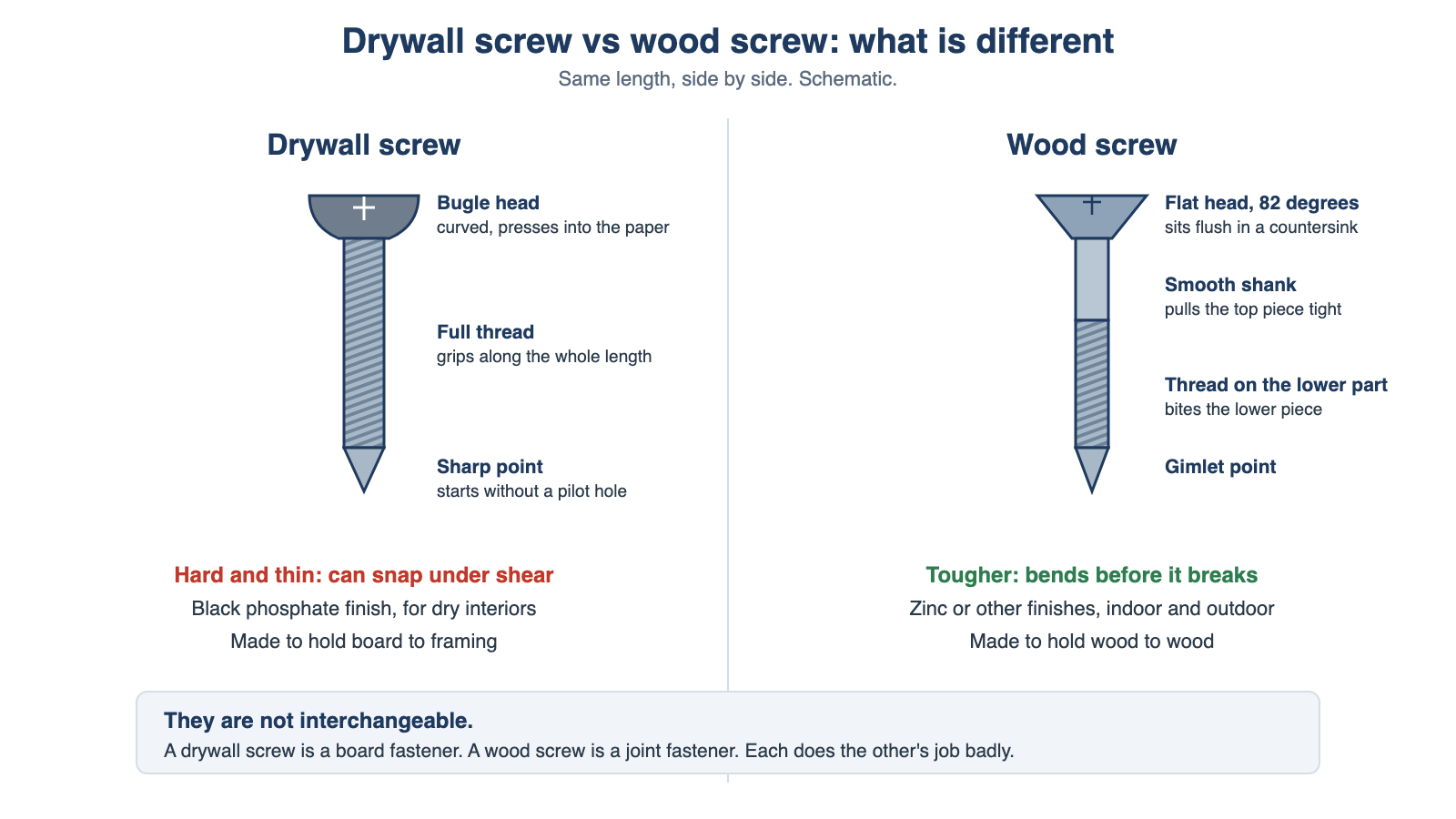
| Drywall screw | Wood screw | |
|---|---|---|
| Head | Bugle: curved underside that presses into the paper | Flat (countersunk), 82 degree cone, or pan and round heads |
| Thread | Full thread. Coarse for wood framing, fine for light steel | Thread on the lower part of the shank |
| Shank | None. Thread runs up to the head | Smooth shank under the head, often about a third of the length |
| Point | Sharp, starts without a pilot hole | Gimlet or similar point |
| Steel | Hard and thin, which makes it brittle | Tougher, bends before it breaks |
| Finish | Typically black phosphate, for dry interiors | Zinc and other finishes, indoor and outdoor |
| Made for | Holding gypsum board to framing | Holding wood to wood under load |
The drywall side of this comparison, including the thread types and gauge, is set out in what length of screw for 1/2 drywall. This article is about how the two families differ.
The head: bugle or flat
A drywall screw has a bugle head so that it can be driven just below the paper and stop there. A wood screw has an 82 degree flat head so that it can fill a countersunk hole flush with the wood.
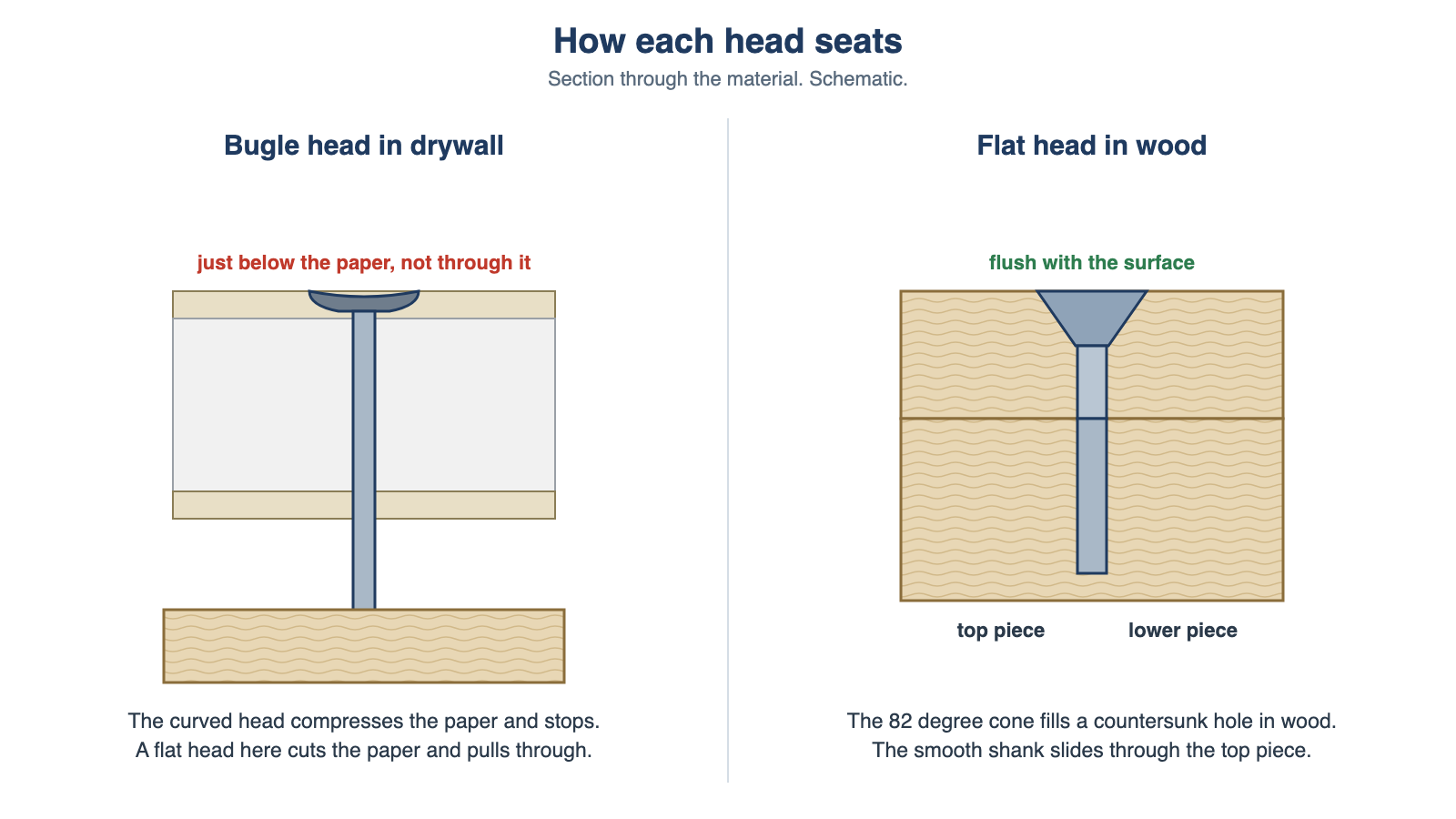
The curve of the bugle head presses the face paper without tearing it, which is what holds the board. A flat head wood screw in drywall has a sharp cone under the head, so it cuts the paper and tends to pull through. Going the other way, a bugle head in hardwood does not fill a countersink and does not give the same flush finish.
The thread and shank
A wood screw has a smooth shank under the head so that it can pull the top piece tight to the lower piece. A drywall screw is threaded all the way up, so its thread grips both pieces and can hold the top piece away from the lower one.
In a wood joint, the smooth shank slides through the top piece while the thread bites only into the lower piece, and turning the head draws the two together. With a fully threaded drywall screw the thread engages the top piece too, so a gap can stay open as the screw is driven. For board on a frame this does not matter, because the board is held by the head against the paper.
The steel: hard and thin, or tough
A drywall screw is made of hardened steel, which makes it brittle. Under a sideways load or vibration it is more likely to snap than to bend, while a wood screw can flex before it fails.
That is the real reason for the rule that drywall screws do not belong in structural wood joints. In a shear load, such as a ledger, a deck board or a bracket holding weight, a brittle screw gives no warning. Fastener suppliers broadly agree on this point, although there is no common published figure to quote, and neither family is stronger in every respect. The drywall screw is harder, and the wood screw is tougher.
Can you use drywall screws for wood, or wood screws for drywall?
Use each screw for its own job. Drywall screws can serve for light, non-structural fixing in dry interior wood, and wood screws should not be used to hang drywall.
| Job | Right screw | Note |
|---|---|---|
| Hanging drywall on wood or steel studs | Drywall screw | Type W for wood, Type S for light steel |
| Light interior work: trim, temporary fixing, furring | Drywall screw or wood screw | Dry, non-structural, no real load |
| Wood-to-wood joints that carry load | Wood screw | Or a structural wood screw if the design calls for it |
| Decking, fences and outdoor timber | Exterior-rated screw | Not a black phosphate drywall screw |
| Anything with shear, vibration or safety consequence | Wood or structural screw, per the design | Never a drywall screw |
| Fixing drywall with wood screws | Not recommended | Head does not seat and tears the paper |
For heavier timber work, structural wood screws are the designed answer, and for outdoor boards the lag bolt and decking screw families apply.
What a distributor should know
For a distributor, the risk is substitution at the counter. Drywall screws are cheaper per piece and widely available, so customers use them for jobs they were not made for. A clear shelf and a clear label do more than a warning in a data sheet.
- Shelve the two apart. Drywall screws belong with board and plaster products, and wood screws with timber and joinery.
- Label the limits. “For gypsum board and light interior use. Not for structural joints” on the drywall pack costs nothing.
- Stock both and answer the substitution question with a product, not a refusal.
- Sell by the job. Boards on studs, joinery in timber, decking and structural work each have their own screw.
- Quote the full specification. Gauge, length, head, thread, drive and finish all differ between the families, as the screw size chart shows.
Final thoughts
Drywall screws hold board and wood screws hold joints. The head, the thread, the shank and the steel all follow from that, and a drywall screw used as a wood screw fails without warning. Stock both, label them, and sell the right one for the job.
Frequently asked questions
What is the difference between drywall screws and wood screws?
Drywall screws have a bugle head, a full thread and hard, thin steel, made to hold board to framing. Wood screws have a flat head, a smooth shank and tougher steel, made to join wood to wood. The head seats differently, the shank decides whether the top piece pulls tight, and the steel decides whether the screw bends or snaps.
Can you use drywall screws instead of wood screws?
For light, non-structural fixing in dry interior wood, sometimes. For structural joints, decks, ledgers or anything under shear or vibration, no. Drywall screws are hard and brittle and can snap without warning, and their finish is for dry interiors. Use a wood screw or a structural screw where the joint carries load.
Can you use wood screws for drywall?
It is not recommended. A flat head wood screw does not seat in drywall the way a bugle head does, so it cuts the paper and tends to pull through, which weakens the hold. A drywall screw is made to sit just below the paper without tearing it, and is the right choice for gypsum board.
Are drywall screws stronger than wood screws?
Not in the way that matters for joints. Drywall screws are harder, but that makes them brittle, so they are more likely to snap under shear or vibration. Wood screws are tougher and can flex before failing. Neither is stronger in every respect, and strength depends on the job, the material and the screw.
Why do drywall screws snap?
Because the steel is hardened, which makes it brittle. A sideways load or vibration can break a drywall screw where a wood screw would bend. That is why drywall screws are not used for structural wood connections, such as decks and ledgers, where a failure gives no warning. For light, dry, non-structural fixings the risk is much lower.
Can drywall screws be used outside?
Not normally. The common black phosphate finish is made for dry interiors and corrodes outdoors or in damp areas. For outdoor timber use an exterior-rated screw, such as a decking screw with a suitable coating, or stainless steel, and match it to the wood and the exposure. Check the pack for the finish before using any screw outdoors.
Do drywall screws need a pilot hole in wood?
Usually not in softwood or studs, because the sharp point starts the screw and the thread cuts its own way. In hardwood or near the end of a board a drywall screw can split the wood or snap, and a pilot hole is advisable. Wood screws need a pilot hole for the lower piece in hardwood, and a clearance hole for the top.
What screws should I use for wood framing?
Use screws made for the job: structural wood screws or screws specified in the design, not drywall screws. Framing carries load and shear, and a brittle screw is not acceptable. Check the project specification, the code and the fastener’s evaluation report, and do not substitute a screw without the designer’s agreement.
Sourcing drywall screws and wood screws
Johnny’s Hardware supplies drywall screws from 3.5 to 4.8 mm, roughly #6 to #10, with bugle heads and Phillips drives, in coarse thread for timber studs and fine thread for metal studs, in black phosphate or zinc plate. Wood screws and the rest of the screw supplier range ship in the same consolidated order, with private label packs through our OEM hardware supplier service.
Send the gauge, length, head, thread, drive, finish, pack size and quantity, and we will come back with specifications and carton data within 12 working hours.
– Johnny’s Hardware Team, Sourcing Advisor