A screw size is three numbers, not one: diameter, length, and thread pitch. Diameter is stated as a gauge number in imperial markets and in millimetres everywhere else, and the two systems do not convert neatly. Length is the number that causes the most trouble, because how it is measured changes depending on the head — and a chart alone will not warn you about that.
This page carries the conversion tables, and it also carries the measuring conventions that make those tables usable on a purchase order. If you are working out which screw type you need in the first place, start with our guide to the types of screws.
The two sizing systems
Every screw is described in one of two systems, and quotes go wrong when a buyer and a factory are each using a different one without saying so.
| System | Diameter stated as | Example | Used in |
|---|---|---|---|
| Metric | Millimetres, then length in millimetres | 4.0 x 40 | Europe, Asia, most of the world |
| Imperial gauge | Gauge number, then length in inches | #8 x 1-1/2″ | United States, Canada |
For gauge numbers, a higher number means a thicker screw. A #10 is thicker than a #8. This runs opposite to nail gauges, where a higher number means a thinner nail — which is why buyers who move between the two categories get caught out.
How screw length is measured, and why it flips
This is the part the conversion charts leave out, and it is the single most expensive assumption on a screw order.
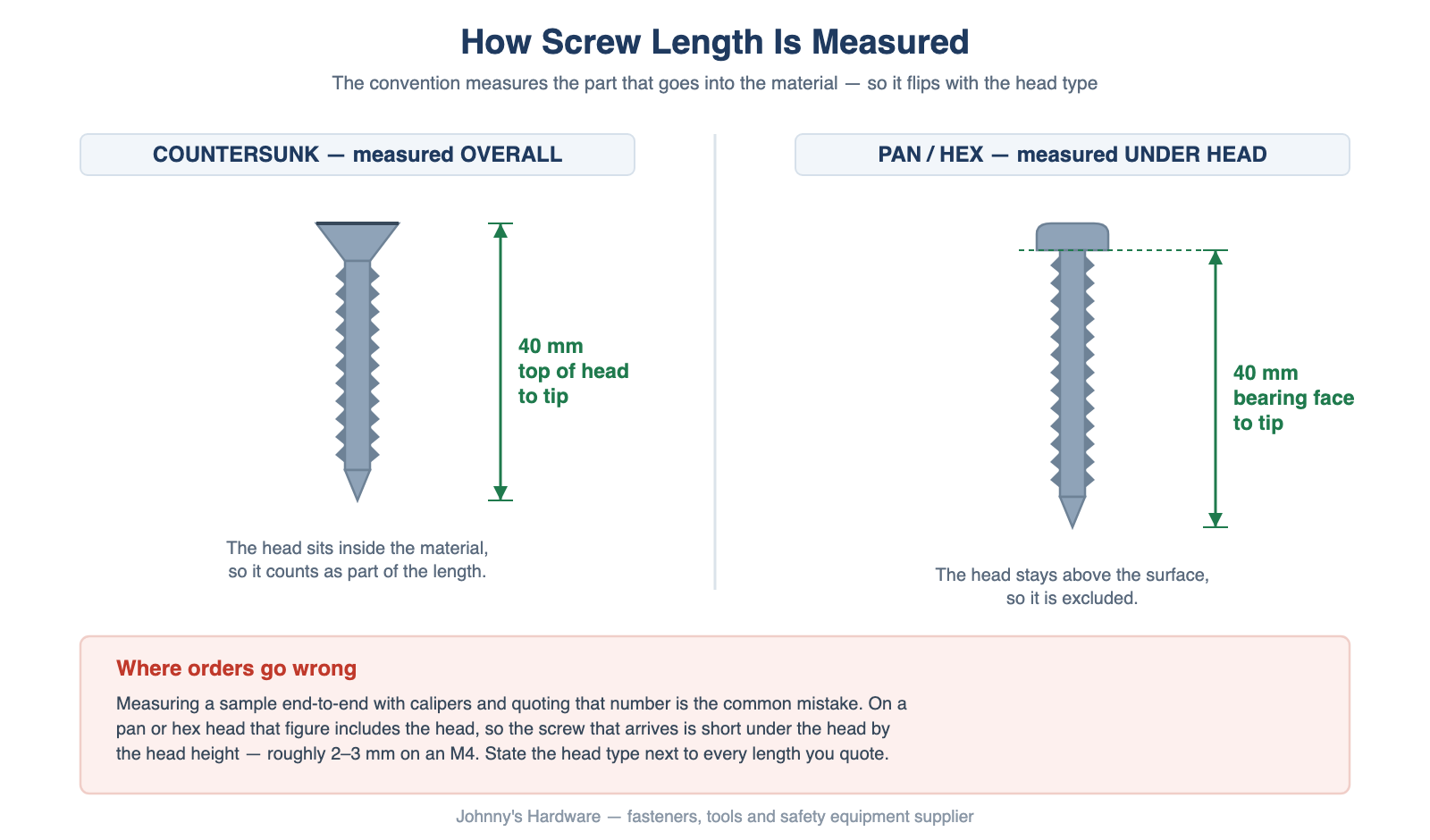
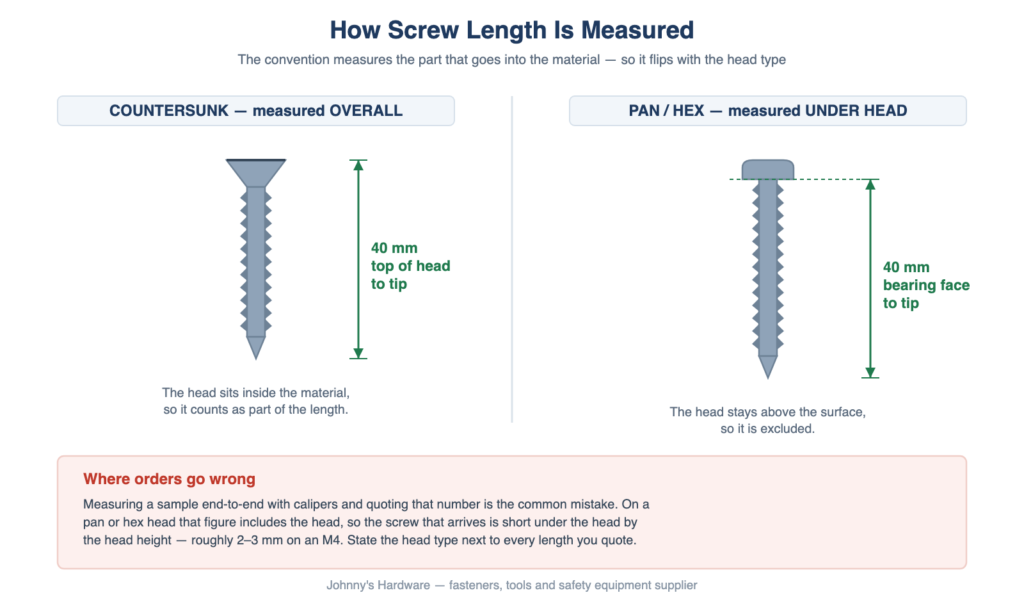
The rule underneath it is consistent: the stated length is the part of the screw that goes into the material. What changes is where that part begins.
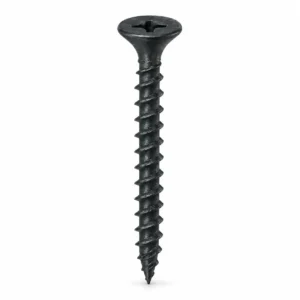
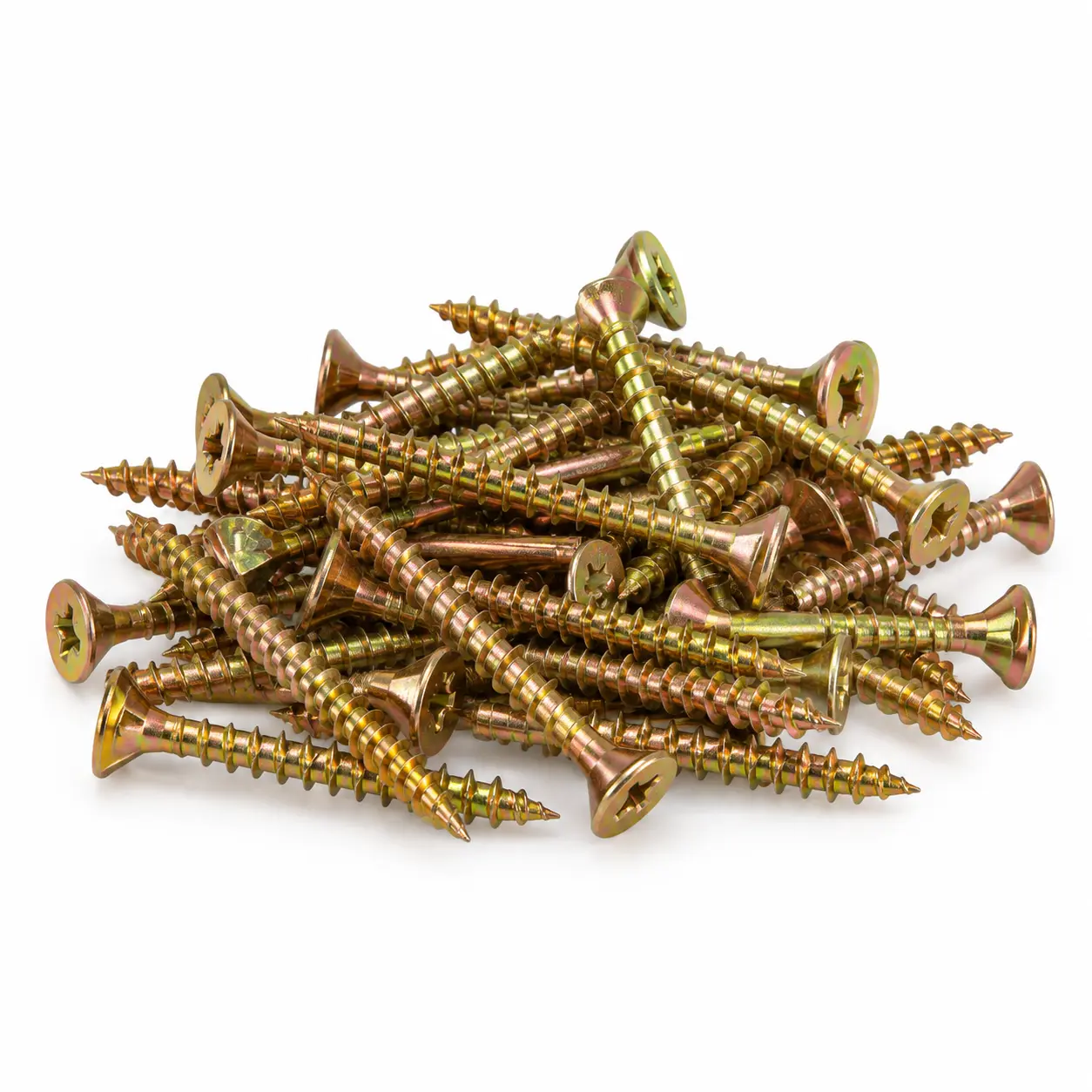
- Countersunk, bugle, oval and trim heads finish inside or flush with the surface, so the head is part of the embedded length. These are measured overall, from the top of the head to the tip.
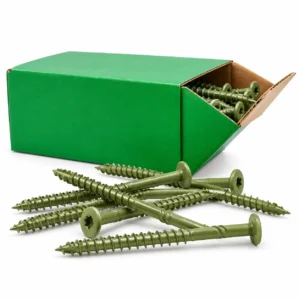
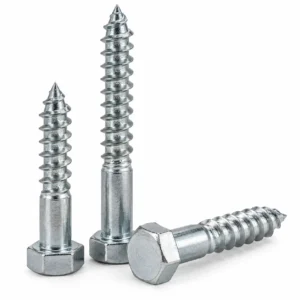
- Pan, hex, truss, button, flange and hex washer heads sit on the surface, so the head is not embedded. These are measured under the head, from the bearing face to the tip.
- Socket cap heads are measured under the head as standard, even though they often drop into a counterbore.
| Head type | Length measured | Because |
|---|---|---|
| Countersunk, bugle, oval, trim | Overall — top of head to tip | The head is inside the material |
| Pan, truss, button, flange | Under head — bearing face to tip | The head sits on the surface |
| Hex, hex washer | Under head | The head sits on the surface |
| Socket cap | Under head | Standard convention, counterbore quoted separately |
Where this costs money. A buyer measures an existing sample end-to-end with calipers, reads 43 mm, and orders 43 mm. If that sample is a pan head, the correct order was 40 mm under the head, and what arrives is roughly 3 mm longer than the part it has to replace. Always state the head type next to the length, and say which convention the number uses if there is any doubt.
Gauge to diameter conversion
Imperial gauge numbers describe the major diameter — the outside of the thread. The table below is the reference most quotes are checked against.
| Gauge | Diameter (inch) | Diameter (mm) | Nearest metric size |
|---|---|---|---|
| #0 | 0.060 | 1.52 | M1.6 |
| #2 | 0.086 | 2.18 | M2 |
| #4 | 0.112 | 2.84 | M3 |
| #6 | 0.138 | 3.51 | M3.5 |
| #8 | 0.164 | 4.17 | M4 |
| #10 | 0.190 | 4.83 | M5 |
| #12 | 0.216 | 5.49 | M5.5 |
| #14 | 0.242 | 6.15 | M6 |
| 1/4″ | 0.250 | 6.35 | M6 |
| 5/16″ | 0.3125 | 7.94 | M8 |
Above #14, imperial screws stop using gauge numbers and switch to fractional diameters — 1/4″, 5/16″, 3/8″ and so on.
Nearest is not equal. The metric column is the closest standard size, not an exact equivalent. A #8 is 4.17 mm and an M4 is 4.00 mm. For most timber work the difference is irrelevant; for anything entering a tapped hole or a matched countersink it is not. Never substitute across systems without confirming it against the application.
Thread pitch and TPI
The third number describes how far apart the threads sit. Metric states the pitch — the distance between adjacent threads in millimetres. Imperial states TPI, threads per inch. They move in opposite directions: a larger pitch means coarser, a larger TPI means finer.
| Metric size | Coarse pitch | Fine pitch | Nearest imperial |
|---|---|---|---|
| M3 | 0.50 mm | 0.35 mm | #4-40 |
| M4 | 0.70 mm | 0.50 mm | #8-32 |
| M5 | 0.80 mm | 0.50 mm | #10-24 |
| M6 | 1.00 mm | 0.75 mm | 1/4″-20 |
| M8 | 1.25 mm | 1.00 mm | 5/16″-18 |
| M10 | 1.50 mm | 1.25 mm | 3/8″-16 |
| M12 | 1.75 mm | 1.25 mm | 1/2″-13 |
Coarse is the default for timber, chipboard and soft material. Fine is for metal and for anything that needs finer adjustment. The same pitch table applies to bolts and nuts, where thread has to match the mating part exactly and where size and grade together set the tightening torque. Metric coarse pitch is standardised, so an M6 is 1.00 mm unless the specification says otherwise — which is one reason metric ordering has fewer failure points than imperial.
Wood screw sizes
Wood screws are usually specified in gauge and inches in North America and in millimetres elsewhere. These are the sizes that carry most of the volume in a general hardware range.
| Gauge | Metric | Common lengths | Typical use |
|---|---|---|---|
| #4 | 3.0 mm | 12–30 mm | Light trim, small hardware |
| #6 | 3.5 mm | 16–50 mm | Cabinet work, hinges |
| #8 | 4.0 mm | 20–80 mm | The general-purpose size |
| #10 | 5.0 mm | 25–100 mm | Framing, heavier joints |
| #12 | 5.5 mm | 40–120 mm | Decking, structural timber |
| #14 | 6.0 mm | 50–150 mm | Heavy timber connections |
Machine screw sizes
Machine screws go into a tapped hole or a nut, so both the diameter and the thread must match the mating part exactly. There is no tolerance for a “nearest size” substitution here.
| Metric | Coarse thread | Tapping drill | Clearance hole |
|---|---|---|---|
| M3 | 0.50 mm | 2.5 mm | 3.2 mm |
| M4 | 0.70 mm | 3.3 mm | 4.3 mm |
| M5 | 0.80 mm | 4.2 mm | 5.3 mm |
| M6 | 1.00 mm | 5.0 mm | 6.4 mm |
| M8 | 1.25 mm | 6.8 mm | 8.4 mm |
| M10 | 1.50 mm | 8.5 mm | 10.5 mm |
| M12 | 1.75 mm | 10.2 mm | 13.0 mm |
Pilot hole sizes for wood screws
Pilot holes are sized against the material, not just the screw. Softwood grips a smaller hole; hardwood needs a larger one or the screw snaps or splits the workpiece.
| Screw | Softwood pilot | Hardwood pilot | Clearance hole |
|---|---|---|---|
| #6 / 3.5 mm | 2.0 mm | 2.5 mm | 3.5 mm |
| #8 / 4.0 mm | 2.5 mm | 3.0 mm | 4.0 mm |
| #10 / 5.0 mm | 3.0 mm | 3.5 mm | 5.0 mm |
| #12 / 5.5 mm | 3.5 mm | 4.0 mm | 5.5 mm |
| #14 / 6.0 mm | 4.0 mm | 4.5 mm | 6.0 mm |
Treat these as starting points. Dense tropical hardwoods and engineered boards behave differently, and a test fixing in the actual material is worth more than any table.
What to put on the purchase order
A size on its own is not an order. Six fields turn a chart reading into something a factory can make without coming back with questions:
- Diameter — metric in millimetres, or the gauge number
- Length, plus the head type — so the measuring convention is unambiguous
- Thread pitch or TPI — required for machine screws, useful everywhere else
- Head shape, and the included angle if countersunk
- Drive type — Phillips, Pozidriv, square, Torx, hex
- Material and finish
Written out, a complete line reads: 4.0 x 40 mm countersunk 90° Pozidriv chipboard screw, zinc plated. Everything a factory needs, and nothing left to interpretation. Our guide to screw head types covers the head and angle fields in more detail.
Final thoughts
Charts are the easy half. The hard half is knowing which convention each number follows — that gauge runs opposite to nail gauge, that a nearest metric size is not an equal one, and that length is measured from a different point depending on the head. Get those three straight and a size chart stops being a reference and starts being a reliable purchase order.
FAQ
What does #8 x 1-1/2″ mean?
The #8 is the gauge, which describes the diameter — roughly 4.17 mm, or the nearest metric equivalent of M4. The 1-1/2″ is the length. Whether that length includes the head depends on the head type: overall for a countersunk screw, under the head for a pan or hex head.
Is a #10 screw bigger than a #8?
Yes. For screws, a higher gauge number means a thicker screw, so #10 at 4.83 mm is thicker than #8 at 4.17 mm. Nails run the opposite way, where a higher gauge number means a thinner nail, as covered in our comparison of nails vs screws. Buyers who handle both categories are the ones who most often get this backwards.
Does screw length include the head?
It depends on the head. Countersunk, bugle, oval and trim heads are measured overall, from the top of the head to the tip, because the head ends up inside the material. Pan, hex, truss, button and flange heads are measured under the head, from the bearing face to the tip, because the head stays on the surface.
What is the metric equivalent of a #8 screw?
M4 is the nearest standard metric size. It is not identical — a #8 measures 4.17 mm and an M4 measures 4.00 mm. For timber work the difference rarely matters. For a machine screw entering a tapped hole, or a countersunk head matched to an existing countersink, the substitution will not work.
What is the difference between thread pitch and TPI?
Both describe thread spacing from opposite directions. Metric pitch is the distance between adjacent threads in millimetres, so a bigger number means coarser. Imperial TPI counts threads per inch, so a bigger number means finer. An M6 coarse is 1.00 mm pitch; the nearest imperial equivalent, 1/4″-20, has 20 threads per inch.
What size pilot hole does a #8 wood screw need?
Around 2.5 mm in softwood and 3.0 mm in hardwood, with a 4.0 mm clearance hole through the top piece if the joint is being pulled together. Dense tropical hardwoods usually need the larger figure or a size above it. Test in an offcut of the actual material before committing to a production run.
Why do quotes come back with the wrong length?
Almost always because a sample was measured end-to-end with calipers and that number was quoted for a head type measured under the head. The screw arrives longer under the head than the part it replaces, by roughly the head height. Stating the head type alongside the length removes the ambiguity entirely.
Should an order be placed in metric or imperial?
Use whichever system the destination market uses, and state it explicitly rather than assuming. Metric has fewer failure points because coarse pitch is standardised against the diameter, so M6 implies 1.00 mm pitch without being stated. Imperial requires the TPI to be named, because both coarse and fine exist at every diameter.
Sourcing screws to your specification
Johnny’s Hardware supplies wood, chipboard, drywall, deck, concrete, self-tapping, self-drilling, machine and lag screws in both metric and imperial sizing, in the head shapes, drive types and finishes each destination market expects. Countersunk heads are available in 82° imperial and 90° metric included angles.
Send the six fields above, or send a sample and we will work the specification back from it. Full details of sizes, materials and order terms are on our screw supplier page, and screws consolidate with the rest of the fastener supplier range in one shipment. Specifications, carton data and lead times come back within 12 working hours.
– Johnny’s Hardware Team, QC Engineer