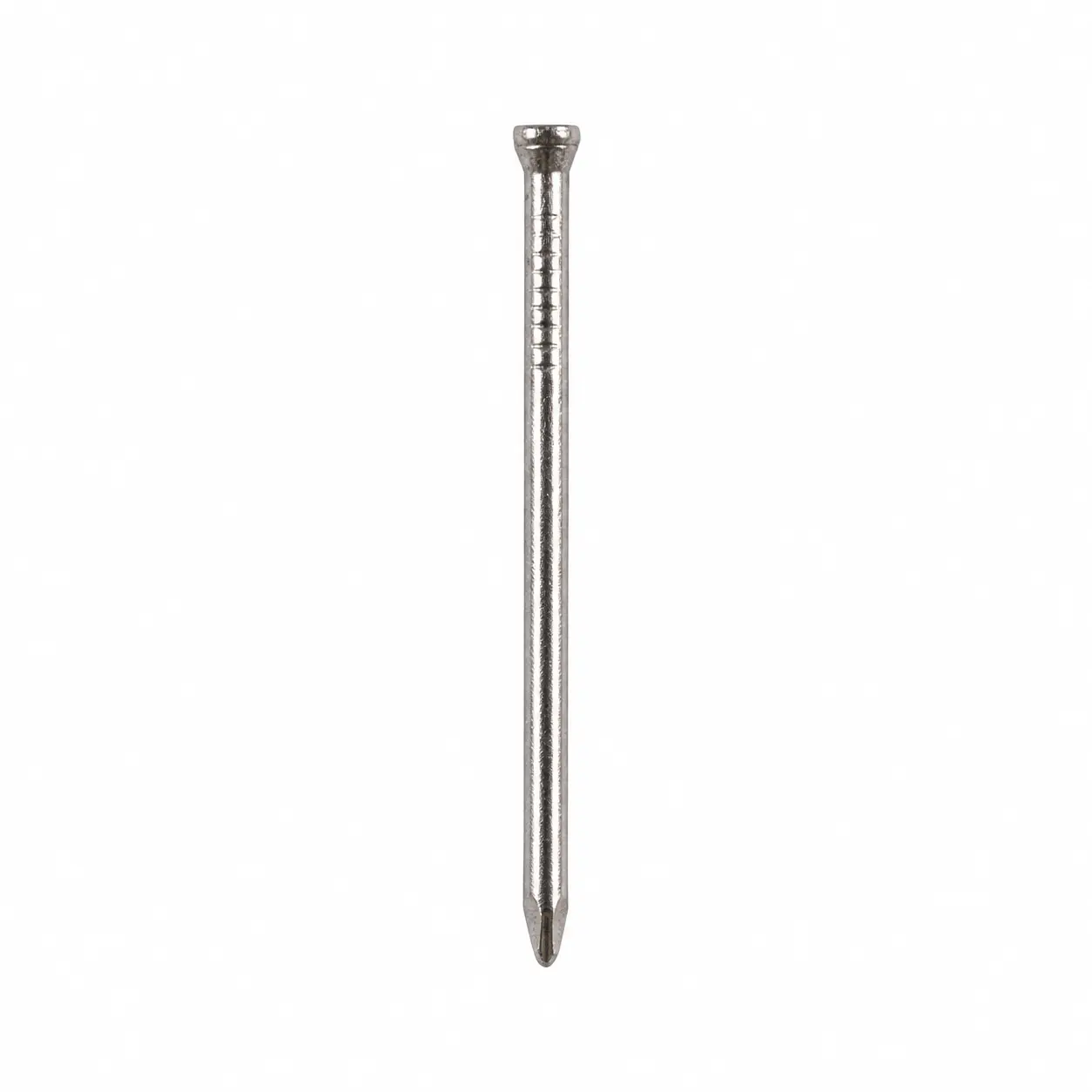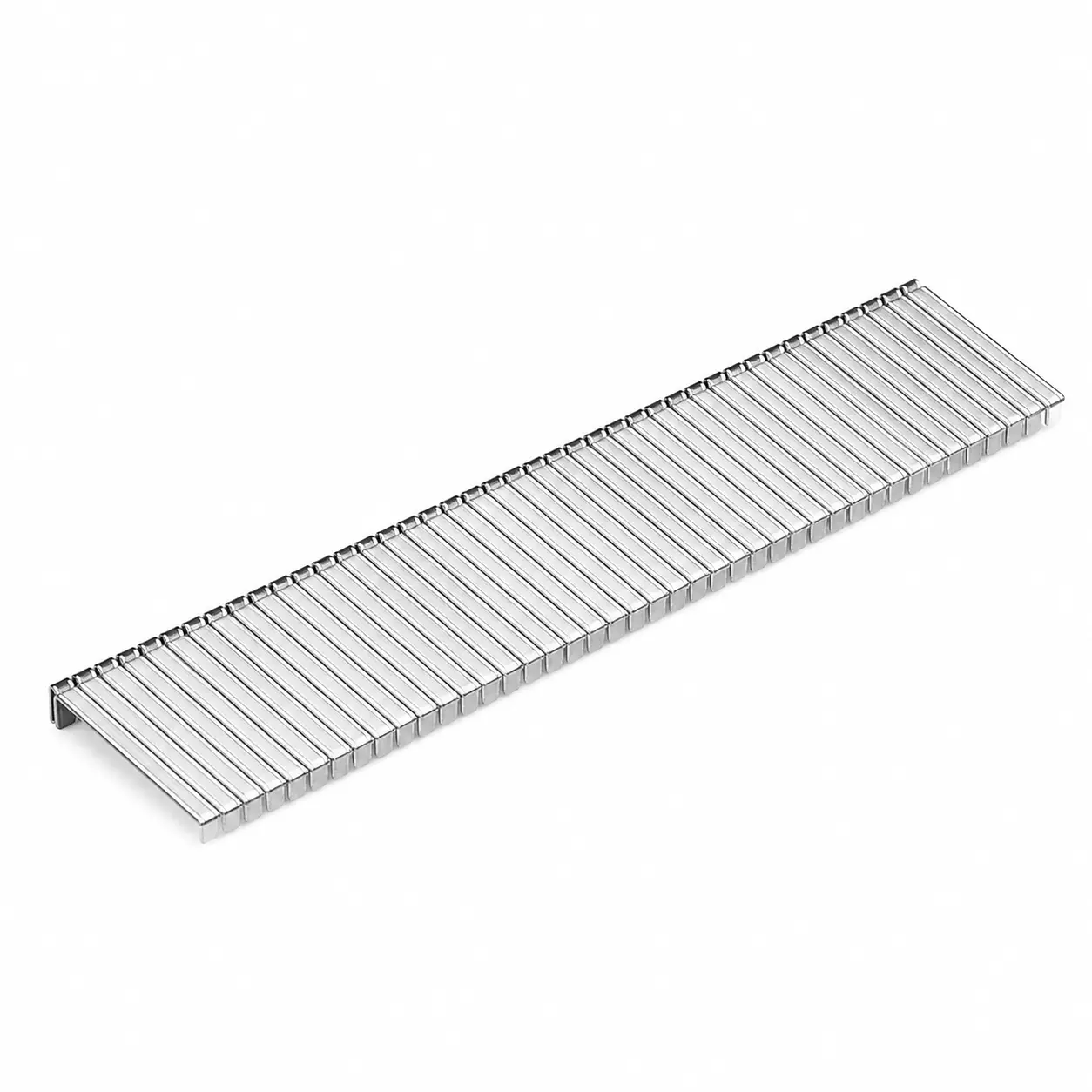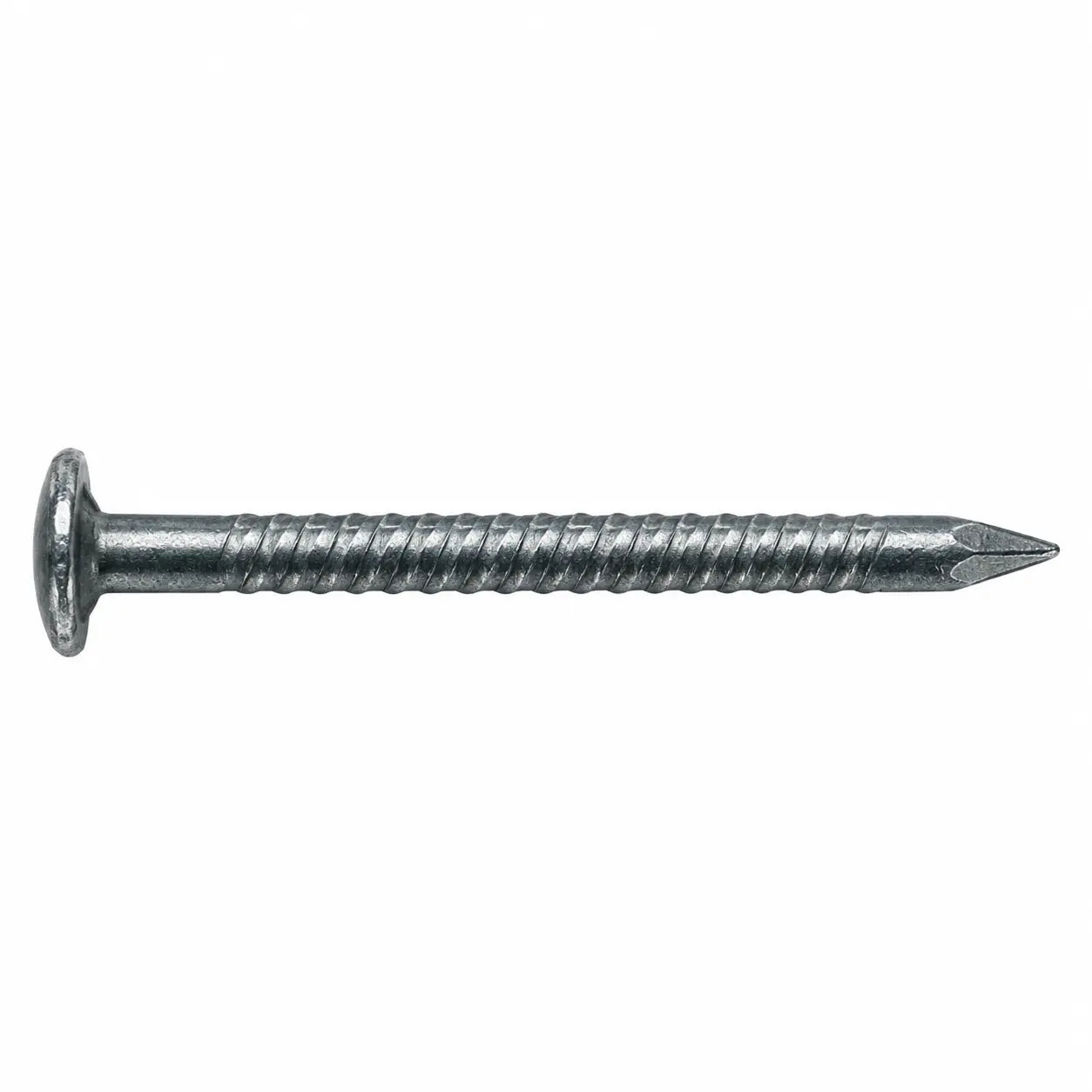
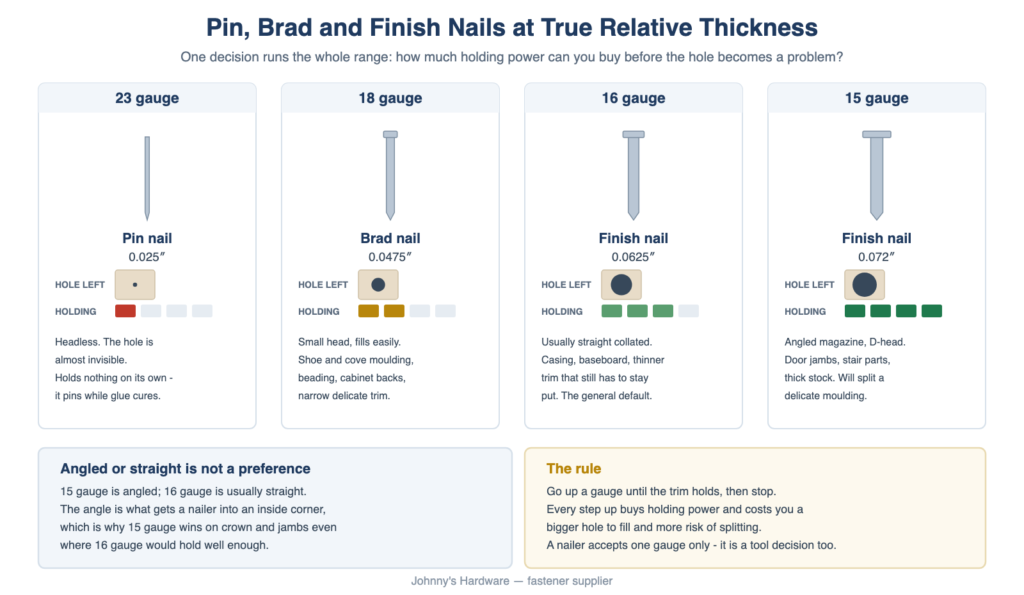
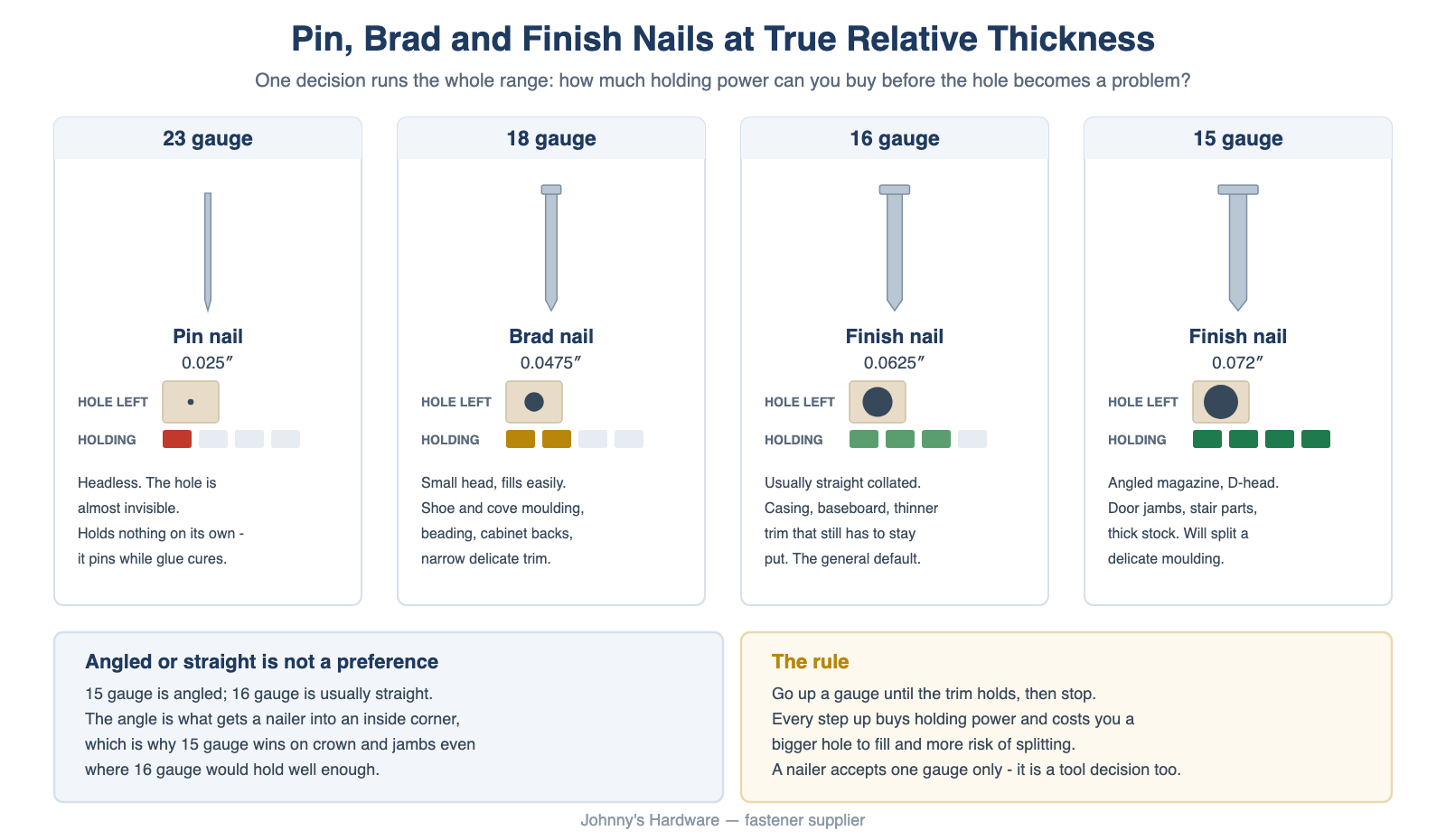
A brad nail is 18 gauge and 0.0475 inches thick. A finish nail is 15 or 16 gauge and roughly half again as thick, at 0.072 or 0.0625 inches. The finish nail holds better; the brad leaves a smaller hole and is far less likely to split the trim. That trade runs the whole length of the range, and it is the only decision being made.
They also take different tools. A brad nailer will not fire finish nails and a finish nailer will not fire brads, so the choice is made once when the tool is bought and then repeated on every order.
Brad nail vs finish nail at a glance
| Brad nail | Finish nail | |
|---|---|---|
| Gauge | 18 | 15 or 16 |
| Diameter | 0.0475″ | 0.072″ (15 ga) / 0.0625″ (16 ga) |
| Head | Small, barely wider than the shank | Larger; 15 gauge usually a D-shaped head |
| Typical lengths | ⅝″ to 2″ | 1″ to 2½″ |
| Collation | Straight strip | 16 ga usually straight; 15 ga angled, typically 34° |
| Holding power | Light. Holds trim in place, not under load | Strong enough for jambs and structural trim |
| Splitting risk | Low | Real, especially 15 gauge in narrow or delicate stock |
| Hole to fill | Small; often needs no filler on painted work | Visible; filling and sanding is assumed |
What each one is actually for
18 gauge brad nails
Brads are the general-purpose trim fastener. The head is small enough that on painted work the hole often disappears under a single coat, and the thin shank rarely splits narrow stock. That combination is why they dominate light trim: shoe and cove moulding, beading, glass bead, cabinet backs, small returns, and anything narrow enough that a thicker nail would burst it.
Their limit is holding power. A brad will keep a piece of trim in position while adhesive cures and will hold light moulding indefinitely, but it will not pull a bowed board tight to a wall and will not hold a door jamb against the racking that comes from a slamming door. If you find yourself firing four brads where one would do, you have chosen the wrong gauge.
16 gauge finish nails
The 16 gauge is the sensible default for most casing and baseboard. It is noticeably stiffer than a brad, holds a board tight, and still leaves a hole small enough that filling is quick. Most are straight collated, which keeps the nailer slim.
15 gauge finish nails
Fifteen gauge is the heavy end: door jambs, stair parts, thick or hardwood trim, exterior casing. The nails usually have a D-shaped head and come angled, typically at 34°.
The angle is not a styling choice. An angled magazine lets the tool reach into an inside corner and up against a jamb where a straight magazine simply will not fit. That access advantage is why 15 gauge gets chosen for crown moulding and jamb work even where 16 gauge would hold perfectly well. The cost is a bigger hole and a genuine risk of splitting anything delicate.
23 gauge pin nails
Worth knowing because buyers often ask for them alongside brads. A pin nail is headless at 0.025 inches, leaves a hole that is effectively invisible, and has almost no holding power at all. It is not a lighter brad — it is a clamp substitute, used to hold a mitre or a small moulding in position while glue cures. Specifying pins for a job that needs holding will produce trim on the floor.
Choosing between them
| Job | Use | Why |
|---|---|---|
| Shoe and quarter round | 18 ga brad, 1″–1¼″ | Narrow stock splits easily and there is nothing to resist |
| Cabinet backs and drawer bottoms | 18 ga brad, ⅝″–1″ | Thin panel, no load, hole must stay small |
| Baseboard and casing | 16 ga finish, 2″–2½″ | Must reach framing behind the drywall and pull the board flat |
| Crown moulding | 15 ga angled, or 16 ga | Angled magazine reaches the corner; heavier profiles need the holding power |
| Door jambs and stair parts | 15 ga finish | Takes repeated impact loading; a brad will work loose |
| Mitred returns and small mouldings | 23 ga pin plus glue | The glue is the joint; the pin only holds position |
| Hardwood trim | 16 ga, or 15 ga if thick | Brads bend and deflect in dense timber rather than driving straight |
The working rule: go up a gauge until the trim actually holds, then stop. Every step up buys holding power and costs you a larger hole, more filling time and more splitting risk. Nothing is gained by over-specifying, and on a painted finish the extra filling shows up as labour.
What this means for stock
For a distributor or a retail trim programme, 18 and 16 gauge carry the volume and 15 and 23 gauge are specialist lines. A defensible core range looks like this:
- 18 gauge brads, ⅝″ to 2″, in the full length ladder — the highest-turning line by a distance
- 16 gauge straight finish nails, 1″ to 2½″, galvanised and bright
- 15 gauge angled finish nails, 1¼″ to 2½″, at 34°, in fewer lengths
- 23 gauge pins, ½″ to 1″, as a small accompanying line
Two things to get right on any order. State the collation angle for 15 gauge — 34° is standard but not universal, and a nailer takes one angle only. And match the finish to the environment: bright steel is for interior work, and any exterior trim or a bathroom needs galvanised or stainless, because a rusting brad head will bleed through paint and ruin the finish it was chosen to protect. Coating life by environment is covered in do zinc screws rust.
Final thoughts
Brad against finish nail is one trade made repeatedly: holding power on one side, hole size and splitting risk on the other. Eighteen gauge for anything narrow or delicate, sixteen for casing and baseboard, fifteen where the joint takes real load or the corner demands an angled tool, twenty-three where glue does the work. Fix the gauge and the length follows from what you are nailing into.
FAQ
What is the difference between brad nails and finish nails?
Thickness, and everything that follows from it. Brad nails are 18 gauge at 0.0475 inches; finish nails are 15 or 16 gauge at 0.072 or 0.0625 inches. The finish nail holds significantly better and suits casing, baseboard and jambs. The brad leaves a much smaller hole and rarely splits narrow trim, which is why it dominates light moulding work.
Can I use brad nails instead of finish nails?
Only where the load allows it. A brad will hold light moulding indefinitely but will not pull a bowed board tight or survive the repeated impact a door jamb takes. The tools are also different — a brad nailer cannot fire finish nails and vice versa — so substituting is not simply a matter of picking a different box off the shelf.
What is a brad nail used for?
Light interior trim where the hole must stay small: shoe and quarter round, cove and glass bead, beading, small returns, cabinet backs and drawer bottoms. The small head often disappears under paint without filler. Brads hold position and light moulding well, and are the wrong choice anywhere the joint carries real load.
Is 16 gauge or 18 gauge better for trim?
Neither is better outright — they suit different trim. Use 18 gauge for narrow, delicate or thin stock where splitting is the risk and the hole must be small. Use 16 gauge for baseboard, casing and anything that has to be pulled tight to the wall. Most trim carpenters own both tools for exactly that reason.
What is the difference between 15 and 16 gauge finish nails?
Fifteen gauge is thicker at 0.072 inches against 0.0625, holds more, leaves a bigger hole and usually comes angled at around 34° with a D-shaped head. Sixteen gauge is normally straight collated and slimmer. The angled magazine on a 15 gauge tool reaches into inside corners a straight one cannot, which often decides the choice regardless of holding power.
Why are 15 gauge nails angled?
So the nailer can fit where a straight magazine cannot. Angling the strip lets the nose of the tool reach into an inside corner, up against a door jamb or under a crown moulding return. The trade-off is that the tool and the nails are tied together — a 34° nailer takes 34° strips only, so the angle belongs on every order.
Do brad nails need a pilot hole?
Not when fired from a nailer, which is how they are almost always driven. Hand-driving a brad into hardwood or close to an end grain edge is a different matter and a pilot hole helps there. If a fired brad is splitting the stock consistently, the answer is usually 23 gauge pins with glue rather than a pilot hole.
What length brad nail should I use?
Aim for roughly three times the thickness of the trim being fastened, so about two thirds of the nail ends up in the material behind. Quarter-inch bead therefore wants around a ¾″ brad, and ½″ trim wants about 1½″. Where the trim is being fixed to drywall over framing, the nail has to be long enough to reach the framing.
Are pin nails the same as brad nails?
No. Pin nails are 23 gauge and headless at 0.025 inches, roughly half the thickness of an 18 gauge brad. They leave a virtually invisible hole and have almost no holding power, so they are used to hold a glued joint in position while it cures rather than to fasten anything. Treating them as small brads leads to trim falling off.
Should trim nails be galvanised?
Indoors, bright steel is fine and cheaper. Anywhere with moisture — exterior trim, bathrooms, kitchens, coastal buildings — specify galvanised or stainless. A bright steel nail head that starts to rust will bleed a brown stain through paint and caulk, and the repair means pulling and replacing the trim rather than repainting it.
Sourcing trim nails
Johnny’s Hardware supplies brad nails in 18 gauge, finish nails in 15 and 16 gauge, pin nails in 23 gauge and panel pins, collated straight or angled at 34°, in bright, electro-galvanised, hot-dip galvanised and stainless.
Every collated line is quoted with the gauge, length, collation type and angle stated on the specification, so nothing arrives that a customer’s nailer will not take. Trim nails consolidate with the rest of the nail range — common, framing, roofing and the specialty types — and with the wider fastener supplier catalogue in one shipment, with private label and retail packaging through our OEM hardware supplier service.
If sizes are still open, the nail size chart covers the penny and gauge systems across the whole range.
Send the gauge, length, collation angle, finish and quantity, and we will come back with specifications, carton data and lead times within 12 working hours.
– Johnny’s Hardware Team, QC Engineer