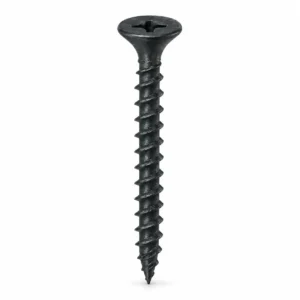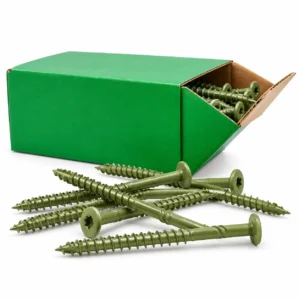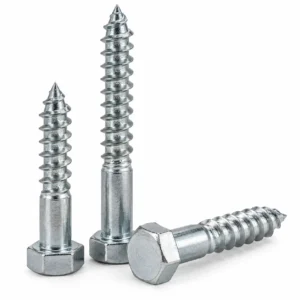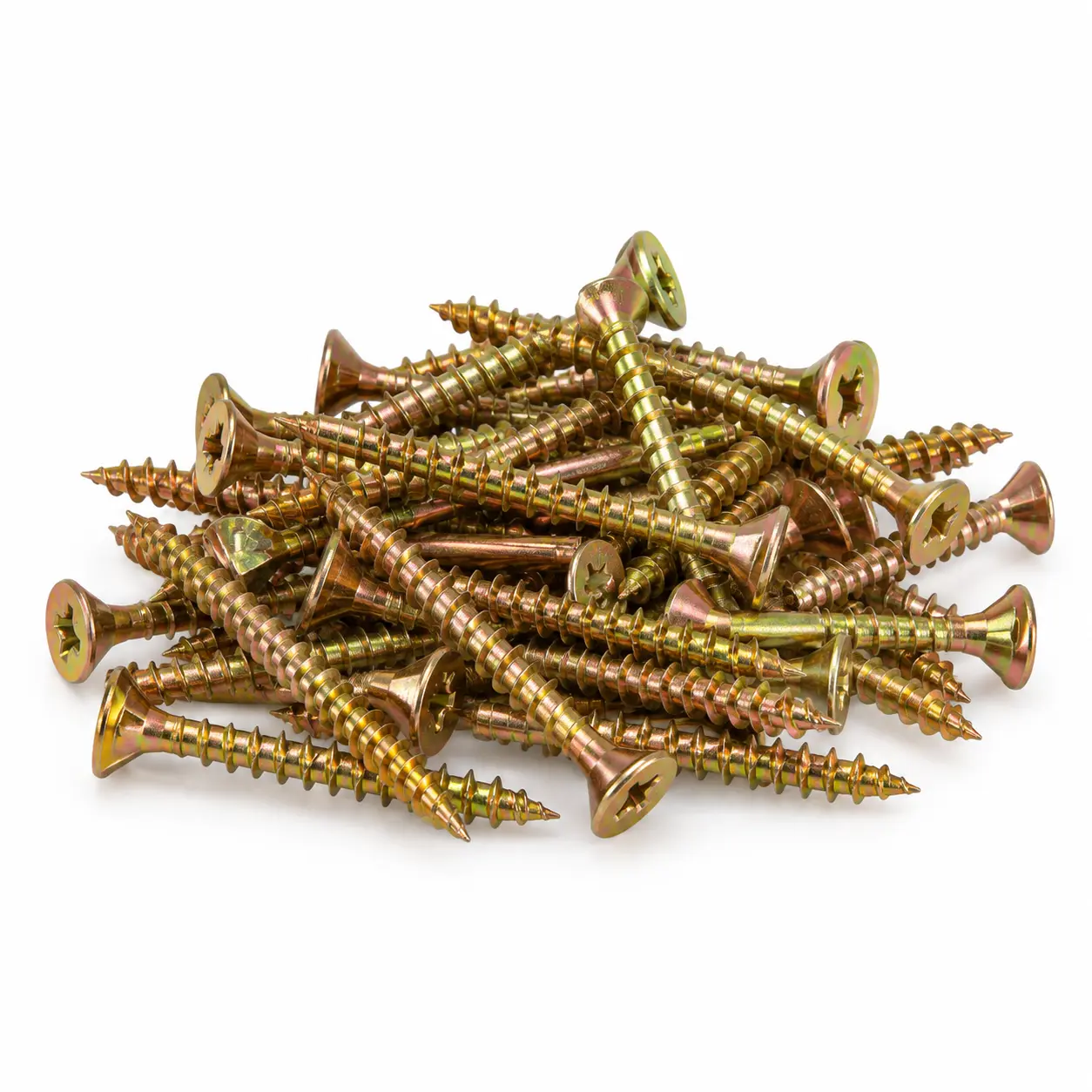
A self-tapping screw is a screw that forms its own mating thread as it is driven, instead of needing a thread cut into the material beforehand. It still needs a pilot hole in most materials — what it does not need is a separate tapping operation. That one distinction decides whether the screw on the drawing is the screw that arrives.
That distinction is where most sourcing errors start, because “self-tapping” and “self-drilling” get used as if they mean the same thing. They do not, and ordering the wrong one makes an entire shipment useless for the job. This guide covers what self-tapping screws actually are, how they differ from self-drilling, and what a buyer has to specify to get the right product quoted.
If you are still mapping out the wider category, our guide to the types of screws covers how self-tapping fits alongside wood, drywall, machine and masonry screws.
How a self-tapping screw actually works
The thread on a self-tapping screw is harder than the material it goes into. As the screw turns, that thread deforms or cuts the wall of the pilot hole into a matching female thread. The screw effectively taps the hole for itself, in one operation, as it seats.
There are two mechanisms, and the difference matters when you are specifying for a particular material.
| Mechanism | What it does to the material | Best for | Trade-off |
|---|---|---|---|
| Thread-forming | Displaces it — pushes material aside, produces no chips | Ductile plastics, thin sheet, soft metals | Can crack brittle material; needs higher driving torque |
| Thread-cutting | Removes it — a flute in the tip cuts chips away | Thicker steel, cast metal, brittle plastics | Lower pull-out strength; chips stay in the hole |
Thread-forming generally gives the stronger joint, because the displaced material work-hardens around the thread and there is no cut fibre to weaken it. That is why it is the default for plastics and thin sheet. Thread-cutting exists for the materials that would simply split if you tried to displace them.
Self-tapping vs self-drilling: the difference that matters
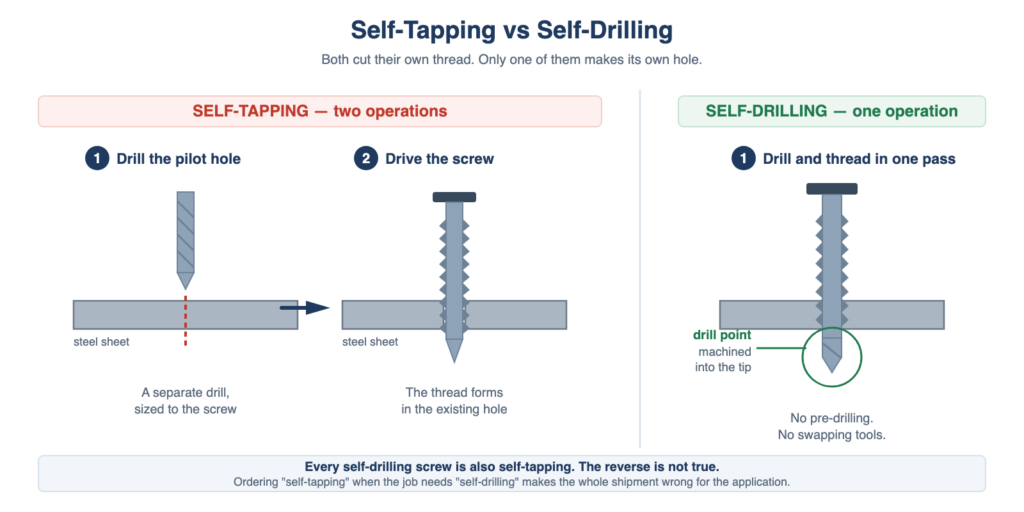
Here is the rule in one line: every self-drilling screw is also self-tapping, but most self-tapping screws are not self-drilling.
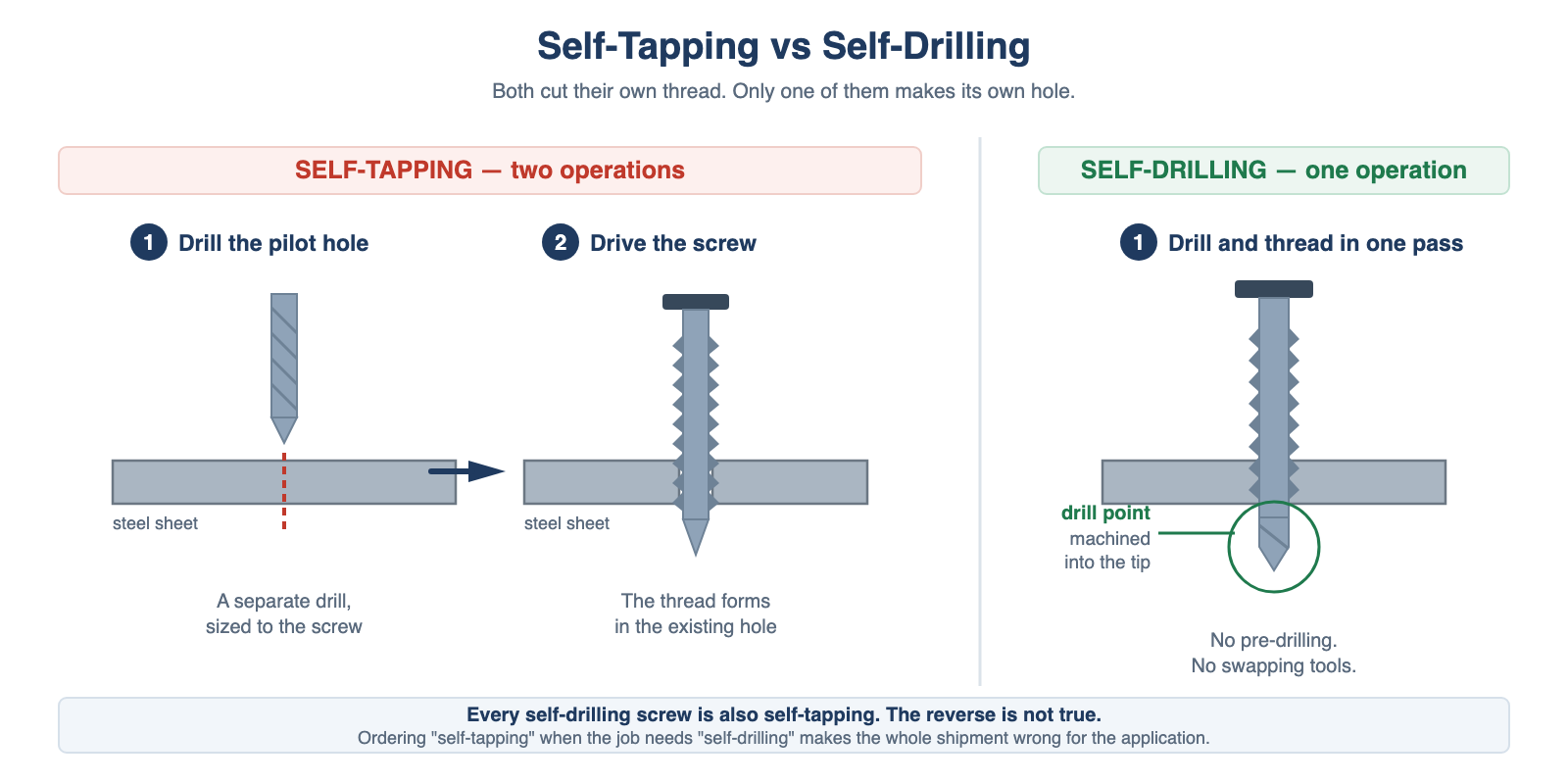
A self-drilling screw — commonly called a TEK screw — has a small drill flute machined into its tip. It drills the hole, then the thread behind the point taps it, all without the operator changing tools. A plain self-tapping screw has no drill flute, so someone has to drill the pilot hole first.
| Self-tapping | Self-drilling (TEK) | |
|---|---|---|
| Pilot hole | Required in most materials | Not required |
| Operations | Two — drill, then drive | One |
| Tip | Sharp or blunt point | Drill flute |
| Typical substrate | Thin sheet, plastic, timber | Steel sheet, purlins, roofing |
| Unit cost | Lower | Higher — the drill point adds machining |
| Where it wins | Cost per unit, thin or soft material | Labour time on site |
Commercially, the trade-off is unit cost against installation labour. Self-drilling screws cost more per piece but remove an entire operation from the job. On a roofing or steel-frame project with thousands of fixings, that labour saving outweighs the piece price every time — which is why trade customers ask for TEK screws by name and will not accept a plain self-tapping substitute.
Point types: what a factory actually quotes on
“Self-tapping screw” is not a specification. The point type is, and naming it correctly is the difference between a quote that matches your requirement and one that does not.
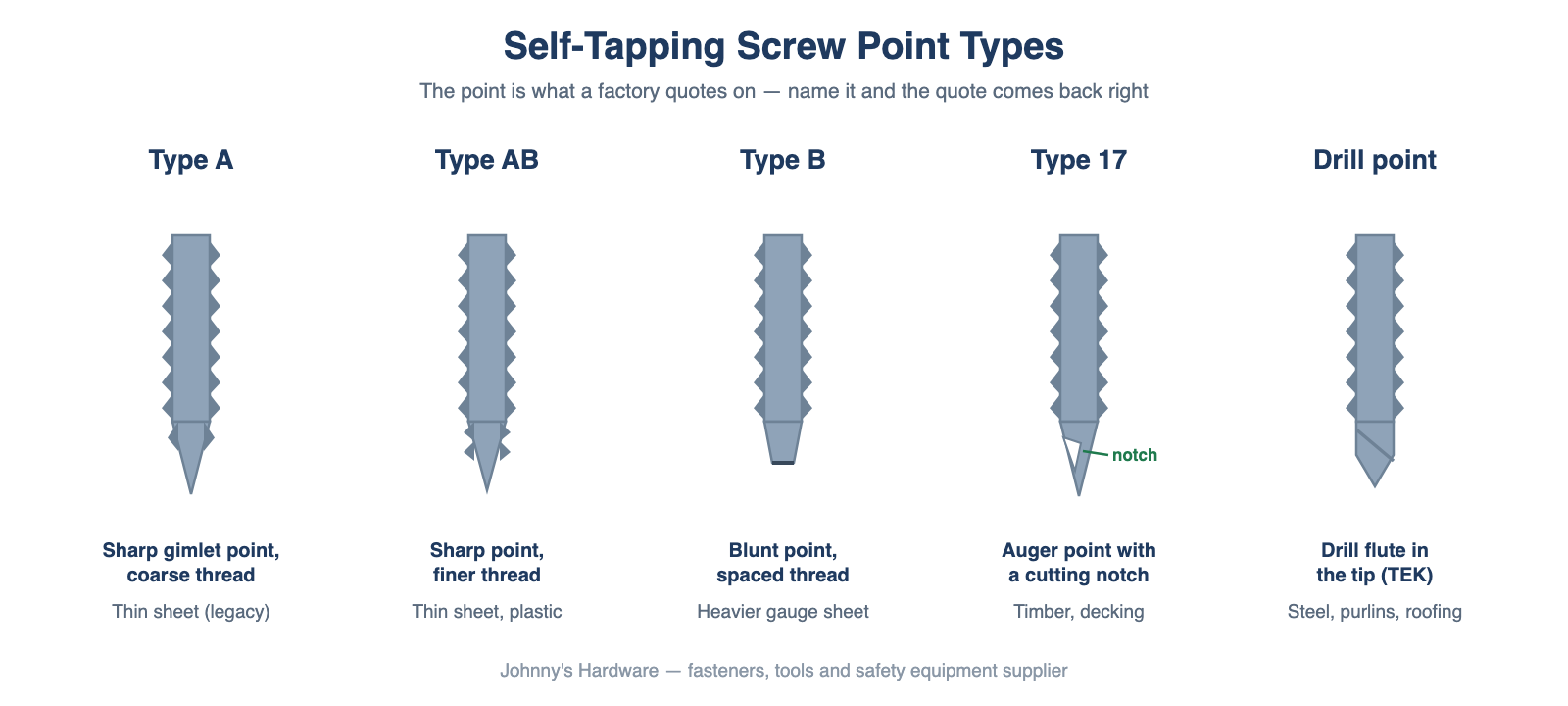
- Type A — sharp gimlet point with a coarse, widely spaced thread. Designed for thin sheet metal. Largely superseded by Type AB in modern production.
- Type AB — the same sharp point with a finer thread. The general-purpose sheet metal and plastics point, and the most commonly stocked.
- Type B — blunt point with a spaced thread, for heavier gauge sheet. The blunt tip means a properly sized pilot hole is not optional.
- Type 17 — a sharp auger point with a cutting notch machined into the tip. The notch clears material ahead of the thread, which is why it dominates timber and decking screws.
- Drill point (TEK) — a true drill flute. Sized by a number from #1 to #5 according to how thick a steel section it can get through.
TEK drill point capacity
The number after “TEK” is the drilling capacity, not the screw diameter. Approximate steel thickness ranges:
| Point number | Steel thickness (approx.) | Typical use |
|---|---|---|
| #1 | up to ~1.9 mm (0.075″) | Light gauge sheet, metal studs |
| #2 | up to ~4.4 mm (0.175″) | General sheet metal work |
| #3 | up to ~6.3 mm (0.250″) | Purlins, light structural |
| #4 | up to ~9.5 mm (0.375″) | Heavier steel sections |
| #5 | up to ~12.7 mm (0.500″) | Heavy structural steel |
Treat those as indicative. Published capacities differ between manufacturers, so confirm the figures against the factory’s own data sheet before you commit a specification to a customer.
The standards behind the point types
Point designations are not marketing names. Tapping screw threads and points are defined by ISO 1478 and ASME B18.6.4, which is where Type A, AB, B and C come from. Self-drilling screws are covered by DIN 7504 and ISO 10666, and hexagon washer head drilling screws by ISO 15480. Quoting the standard alongside the point type is the fastest way to remove ambiguity, because it fixes the thread form and the point geometry together.
The stainless steel problem buyers should know about
This one catches out a lot of first-time importers. Austenitic stainless steel — grades 304 and 316 — cannot be hardened by heat treatment the way carbon steel can. A screw made entirely of 304 is simply not hard enough to drill through carbon steel: the drill point deforms before it cuts.
So a genuine stainless self-drilling screw is almost always bi-metal: a stainless body welded to a hardened carbon steel drill point. You get the corrosion resistance of stainless across the exposed length, plus a point hard enough to actually drill.
Two consequences for a buyer:
- If a supplier quotes “316 self-drilling screws” at a price close to plain carbon steel, ask directly whether the point is bi-metal. If it is solid 316, it will not drill structural steel.
- The carbon steel point can corrode after installation, leaving a small rust spot at the tip. In coastal or architectural work where appearance matters, this needs flagging to the customer up front.
Pilot hole sizing
For self-tapping screws into metal, the working principle is that the pilot hole should match the screw’s minor diameter — the root of the thread, not the outer crest. Too small and the screw shears or the head snaps off; too large and the thread has nothing to bite into and the joint pulls out under load.
Plastics are less forgiving in the other direction. Brittle plastics generally need a slightly larger pilot than ductile ones, because thread-forming stress will crack them. Where a customer is fixing into a specific engineering plastic, the resin supplier’s recommended boss dimensions should override any generic table.
When a self-tapping screw is the wrong choice
Self-tapping screws are for sheet metal, plastics and thin sections. They are not a universal answer:
- Structural timber framing — the load is lateral, and hardened screws are brittle in shear. Use nails or rated structural screws instead; our comparison of nails vs screws covers why.
- A joint that comes apart repeatedly — the formed thread degrades each time the screw is removed and refitted. Use a machine screw into a tapped hole, or a bolt and nut.
- Concrete or masonry — needs a purpose-made concrete screw or an anchor. A sheet metal self-tapper will not hold.
- Thick plate beyond the point’s capacity — exceeding a TEK point’s rated thickness burns the point out before it gets through.
What to specify when you order
A complete self-tapping screw specification names six things. Leave any of them out and the factory has to guess:
- Diameter and length — metric (4.2 x 25) or gauge (#8 x 1″), with the head type stated so the length convention is unambiguous (see the screw size chart)
- Point type — Type AB, Type B, Type 17, or TEK #1 to #5
- Head shape — pan, countersunk, hex washer, wafer (see the full range of screw head types)
- Drive — Phillips, Pozidriv, square, Torx, hex
- Material — carbon steel, 304, 316, or bi-metal
- Finish — zinc plated, hot-dip galvanised, black phosphate, ruspert or similar
For roofing and cladding work, add whether a bonded EPDM sealing washer is required — it is a separate component and it is frequently forgotten at quotation stage.
FAQ
What is a self-tapping screw used for?
Fastening into sheet metal, plastics, thin steel sections and some timber applications, where cutting a thread in advance would be impractical or uneconomic. It forms its own mating thread as it is driven. On a production line this removes an entire tapping operation, which is usually the reason the screw was specified in the first place.
Do self-tapping screws need a pilot hole?
In most materials, yes. Sharp-point types can start unaided in very thin or soft material, but blunt-point types such as Type B always need one. Self-drilling screws are the exception, because the drill point makes its own hole. The pilot should match the screw’s minor diameter — the thread root, not the outer crest.
What is the difference between self-tapping and self-drilling screws?
A self-tapping screw forms its own thread but needs a pre-drilled hole. A self-drilling screw has a drill flute machined into the tip, so it drills the hole and forms the thread in one pass. All self-drilling screws are self-tapping; the reverse is not true. On a project with thousands of fixings, that difference is an entire operation.
Can self-tapping screws be used in wood?
Type 17 point screws are made specifically for timber and work well, because the cutting notch clears material ahead of the thread. General sheet metal self-tappers are a poor choice for wood — the thread pitch is wrong for the fibre, and the hardened shank is brittle under shear load. For anything structural in timber, specify a construction or structural screw instead.
Are self-drilling drywall anchors the same as self-drilling screws?
No. A self-drilling drywall anchor is an anchor — a threaded plastic or metal body that bores into plasterboard and then receives a separate screw. A self-drilling screw is a fastener that drills and threads into the base material itself. Different product, different function, despite the shared word in the name.
Why do stainless self-drilling screws cost more?
Because most of them are bi-metal: a stainless body joined to a hardened carbon steel drill point. Solid austenitic stainless cannot be heat-treated hard enough to drill carbon steel, so the extra manufacturing step is what you are paying for. It also means the tip itself can corrode after installation, which matters wherever appearance is part of the specification.
Which standards cover self-tapping and self-drilling screws?
Tapping screw threads and points follow ISO 1478 and ASME B18.6.4, which is where the Type A, AB, B and C designations originate. Self-drilling screws follow DIN 7504 or ISO 10666, and hexagon washer head drilling screws follow ISO 15480. Citing the standard next to the point type removes most of the ambiguity from a quotation.
Should thread-forming or thread-cutting screws be used in plastic?
Thread-forming for ductile plastics, thread-cutting for brittle ones. Forming displaces material and work-hardens it around the thread, which gives higher pull-out but will crack a brittle resin. Cutting removes material as chips and relieves that stress, at the cost of a weaker joint. For a specific engineering resin, follow the resin supplier’s recommended boss dimensions.
Final thoughts
Self-tapping and self-drilling are not interchangeable, and the point type is the part of the specification that decides which one arrives. Name the point — Type AB, Type 17, TEK #3 — alongside the diameter, head, drive and finish, and the quotation comes back matched to the job rather than to a guess.
Sourcing self-tapping and self-drilling screws
Johnny’s Hardware supplies self-tapping and self-drilling screws from China to importers, distributors and DIY retail programs — Type A, AB, B and 17 points, TEK #1 to #5, in carbon steel, 304, 316 and bi-metal, with the head shapes, drives and finishes each market expects. Bonded washers, collated strips and retail packs are all available.
Sizes, finishes and order terms are listed on our screw supplier page. They ship alongside the rest of the fastener supplier range in a single consolidated order, and can be run under your own brand through our OEM hardware supplier program.
Send us the six specification points above and we will come back with drawings, carton data and lead times within 12 working hours.
– Johnny’s Hardware Team, QC Engineer